Contents
In plastic injection moulding, a power outage is more than machines stopping. The part being moulded is left incomplete, the material in the mould freezes, and material in the screw and barrel can degrade if it sits too long. The robot arm may be left between the mould halves, and recipes and parameters have to be checked while the controller restarts. After power returns, it often takes hours for machines to reheat and return to stable production.
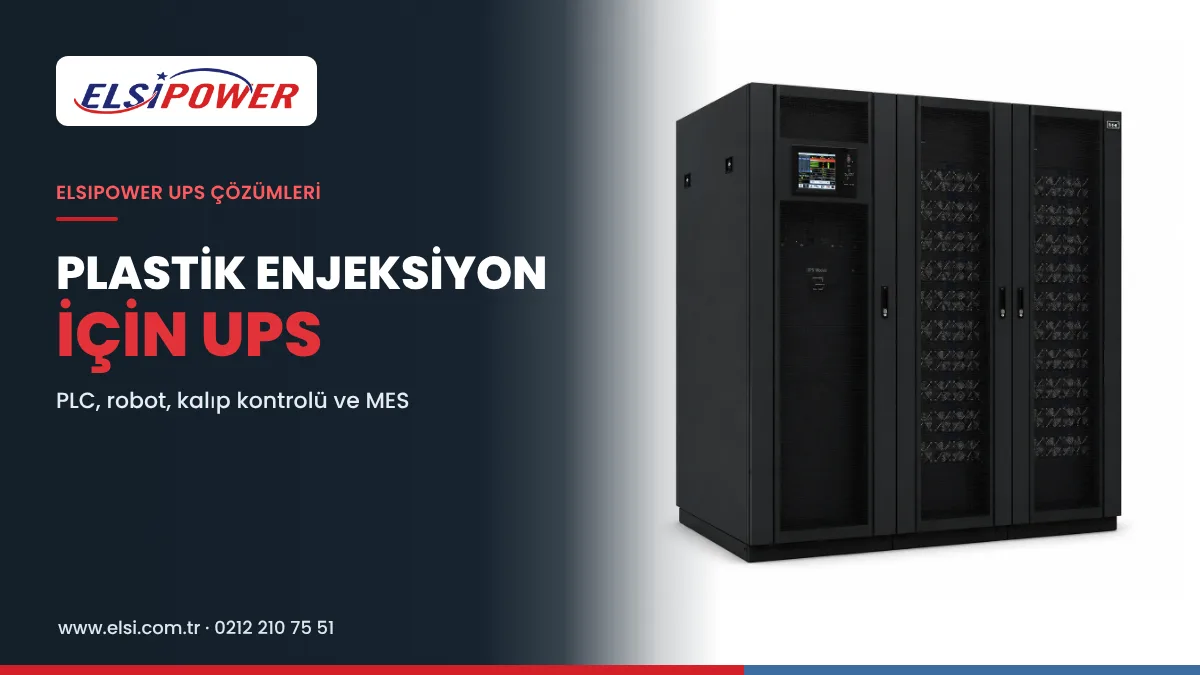
In this article we share which systems need protecting when planning an uninterruptible power supply (UPS) for plastic injection moulding plants, how work is divided between the UPS and the generator, and a worked sizing example.
What Goes on the UPS and What on the Generator?
The hydraulic pump motors and barrel heater bands of injection machines draw very high power. Supplying these from a UPS would require huge capacity at plant scale; the right solution for them is a generator. The UPS protects production’s brain and memory:
| System | Source | Why? |
|---|---|---|
| Machine PLC and operator panel | UPS | Preserving recipes, parameters and alarm logs |
| Robot and part-removal unit control | UPS | Controlled robot stop, no loss of position |
| Mould temperature controller and hot runner control | UPS (control part) | Settings and control are not lost |
| MES / ERP server and network | UPS | Production tracking and data integrity |
| Quality control and measuring equipment | UPS | Protecting measurement data |
| Hydraulic pump motors, heater bands | Generator | Very high power and starting current |
| Chiller and compressor | Generator | High-power motor loads |
With this set-up, control systems never shut down during an outage; when the generator takes over, machines reheat and return to production where they left off, without losing settings. For how a UPS and generator work together, see UPS and generator compatibility.
Which Type of UPS Is Suitable?
In injection plants, large motors switching on and off cause sudden voltage dips and electrical noise on the network. PLCs, operator panels and robot controllers are sensitive to these fluctuations, so an online UPS is the architecture to choose. In practice there are two options:
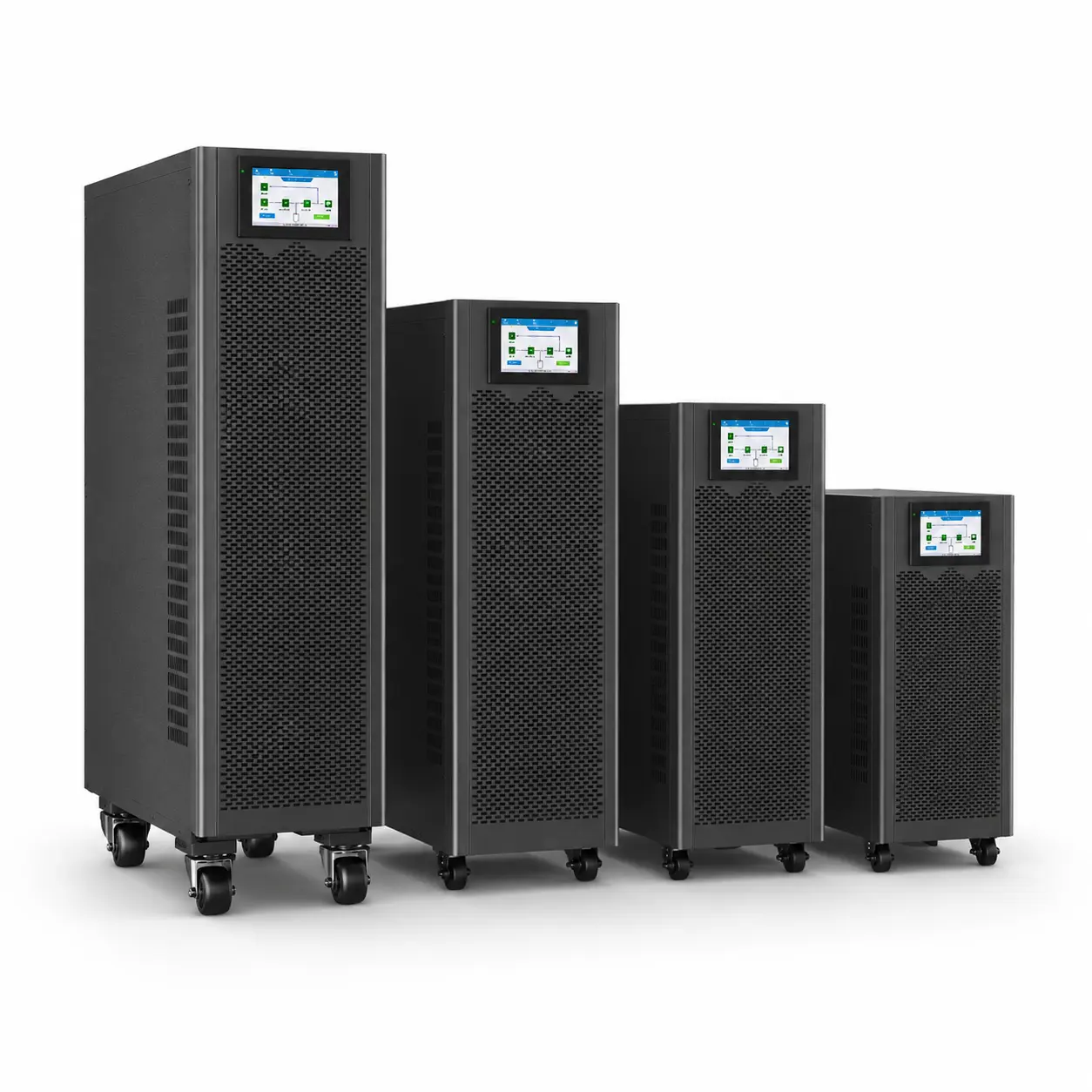
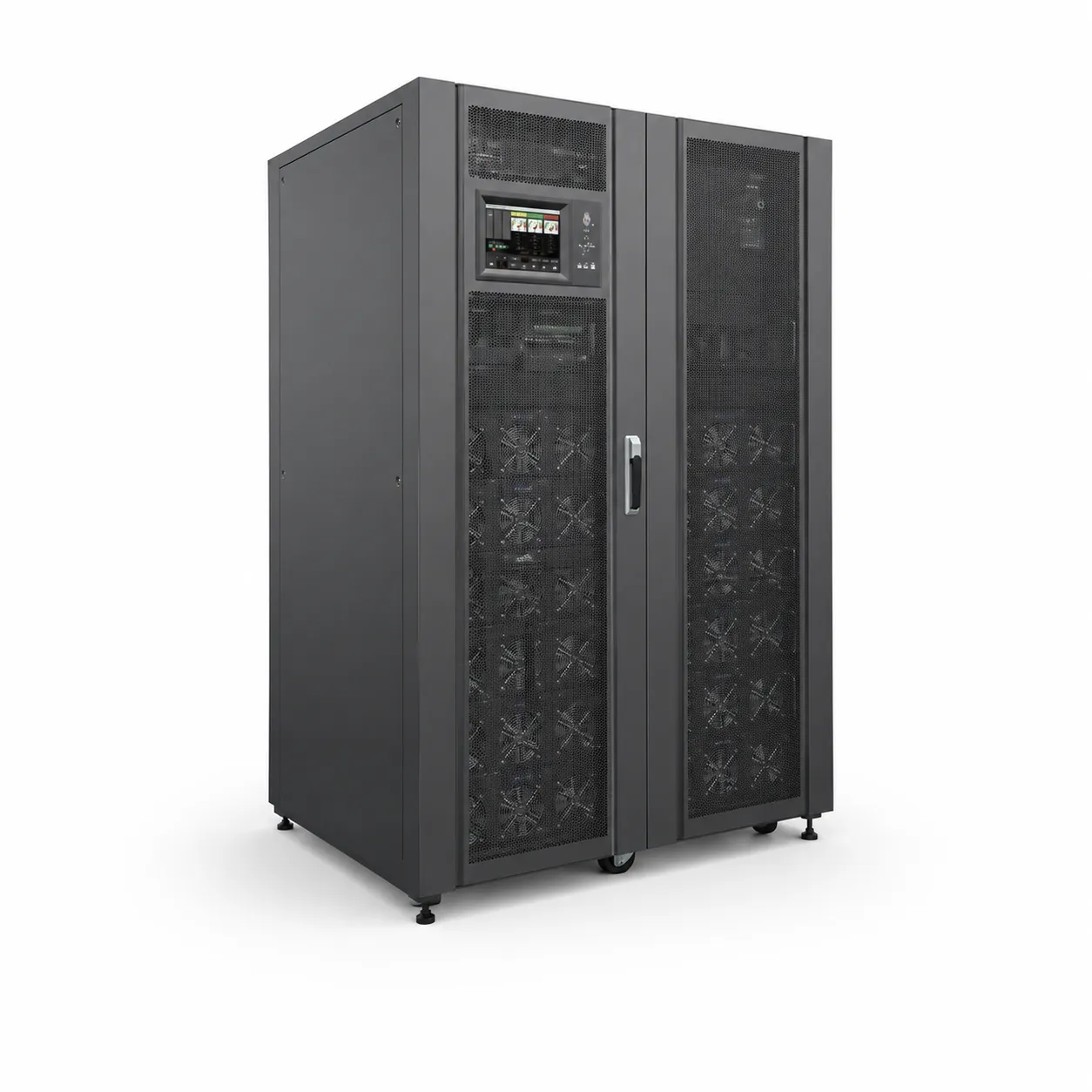
- Central UPS: The control circuits of all machines are supplied from a separate UPS circuit, using a 10–40 kVA three-phase online UPS or, for growing plants, a modular UPS. Maintenance and monitoring are done from one point.
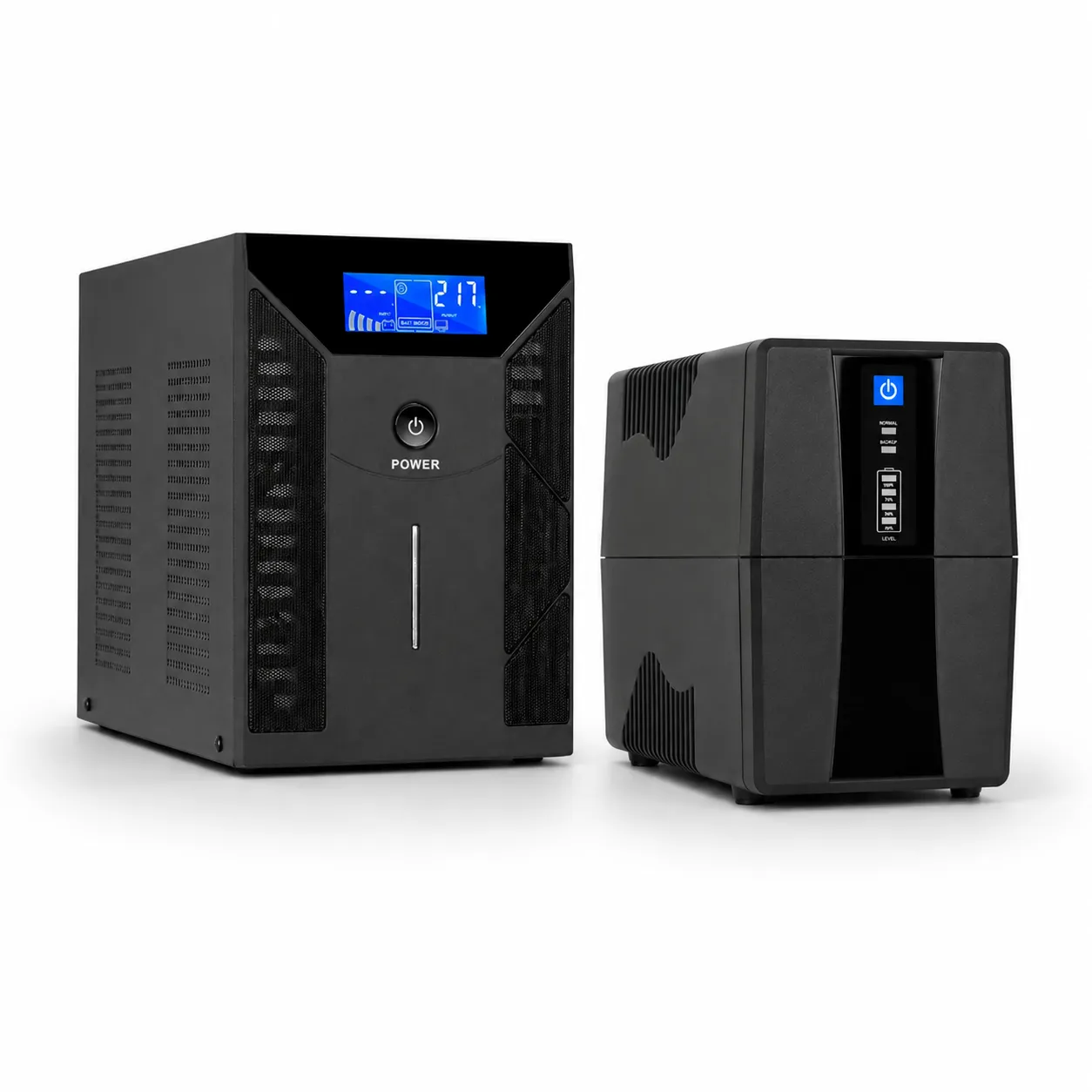
- UPS per machine: A 1–3 kVA single-phase online UPS is placed in each machine’s control panel. Easy to apply in existing plants because it needs no cabling changes.
What Size UPS? A Worked Example (4-Machine Line)
| Load | Estimated power |
|---|---|
| 4 injection machine PLCs and operator panels (4 × 300 W) | 1,200 W |
| 2 robot controllers (2 × 400 W) | 800 W |
| Mould temperature controllers and hot runner control | 300 W |
| MES server and network devices | 500 W |
| Camera recorder and cameras | 200 W |
| Total | 3,000 W |
3,000 W ÷ 0.9 ≈ 3.3 kVA; with a 25% safety margin ≈ 4.2 kVA. A 6 kVA online UPS suits this line. In plants with 15–20 machines, the combined control loads usually call for a 10–20 kVA three-phase online UPS. The values are examples; the actual load is determined by measurements in the panels. For the general method, see what size UPS should I buy.
Voltage Fluctuation and Regulators
In organised industrial zones, voltage often rises and falls during the day. Servo-driven pumps and frequency converters on injection machines can fault or overheat at low voltage. If the whole plant has voltage problems, using a voltage regulator at machine inputs or the main distribution, together with UPS-protected control circuits, forms the soundest set-up. For details, read do voltage fluctuations damage equipment.
Battery Runtime and Maintenance
In plants with a generator, 10–15 minutes of battery time for control systems is enough. Without a generator, the aim is to stop machines safely, park robots and save data. Because dust and heat in factories shorten battery life, UPS units should be installed in a cool, clean electrical room and have periodic maintenance at least once a year. For factory-scale UPS selection, see also choosing a UPS for factories.
The Real Cost of an Outage: Restarting Production
In injection plants, the cost of an outage usually lasts much longer than the outage itself. Even if power returns after a few minutes, barrels must reheat, moulds must reach working temperature and the first parts must pass quality control. The first parts produced in this process are often scrapped. When control systems are protected by a UPS, machines don’t lose their recipes, operators don’t have to check parameters one by one and the plant gets back to production much faster.
In addition, keeping MES and ERP systems running during an outage ensures production counters, shift reports and traceability records remain complete. These records are especially important for plants supplying sectors where traceability matters, such as automotive and household appliances.
Frequently Asked Questions
Does it make sense to put the whole injection machine on a UPS?
Usually not. Because of the hydraulic pump and heater bands, machine power is very high. Control circuits go on the UPS and power circuits on the generator.
What happens to the material in the mould during an outage?
When the machine stops, the material in the mould cools. If the control system is on the UPS, the machine reheats after power returns without losing its settings and gets back to production faster.
How does the robot behave during an outage?
If robot control is on the UPS, position data is kept and the robot can be stopped in a controlled way. If the control loses power, re-referencing may be needed.
A UPS and regulator plan for your plant
Tell us how many machines you have and which control systems you want to protect; with an on-site survey we will plan a three-phase online UPS, modular UPS and, if needed, a voltage regulator solution with you. You can call us on 0212 210 75 51 or send an email to elsi@elsi.com.tr.