Contents
- What Is an Uninterruptible Power Supply and What Does It Do?
- What Should You Consider When Choosing a UPS?
- What Is the Difference Between VA, Watt and kVA?
- How Is UPS Capacity Calculated?
- What Is Each UPS Capacity Generally Used For?
- Should You Choose a Single-Phase or Three-Phase UPS?
- Should You Choose an Online or Line-Interactive UPS?
- How Does Battery Runtime Affect UPS Selection?
- What Size UPS Is Required for a Computer or Office?
- How Should a UPS Be Selected for a Server Room?
- UPS Selection for Factories and Production Machinery
- Uninterruptible Power Supplies for Printing Machinery
- UPS Selection for Hospitals and Medical Equipment
- Demand for Uninterruptible Power Supplies in Istanbul
- UPS Solutions for Industrial Facilities Across Türkiye
- Common Mistakes When Choosing a UPS
- ELSIPOWER Uninterruptible Power Supply Solutions
- Frequently Asked Questions
- Conclusion: Why Is Choosing the Right UPS Important?
Power outages, sudden voltage fluctuations and utility-related power problems can adversely affect many systems, from computers and servers to production machinery and medical equipment. Choosing the right uninterruptible power supply is therefore important not only to keep equipment operating temporarily during a power outage, but also to protect connected devices against power quality problems.
One of the most frequently asked questions when purchasing a UPS is: “What size UPS do I need?” The answer, however, cannot be determined solely by adding up the rated power of connected devices. Load characteristics, starting current, power factor, phase configuration, required battery runtime and future expansion plans must all be considered.
Operating in the power systems industry since 1978, ELSI Power Systems offers ELSIPOWER uninterruptible power supply solutions for a wide range of applications, from small businesses to large industrial facilities.
Not sure what UPS capacity you need? Contact the ELSIPOWER team at +90 212 210 75 51 and share your equipment list and required backup time for an initial assessment.
What Is an Uninterruptible Power Supply and What Does It Do?
An uninterruptible power supply, commonly known as a UPS, is a power protection system that supplies stored battery energy to connected equipment when utility power fails. It allows critical devices to continue operating for a limited period during an outage.
UPS systems are not used only for complete power failures. When properly selected, an uninterruptible power supply can also provide protection against low voltage, overvoltage, sudden voltage changes, frequency variations and electrical noise. This is why UPS systems are essential for server rooms, hospitals, factories, printing facilities, data centres, automation systems and security infrastructure.
What Should You Consider When Choosing a UPS?
The first step in selecting the right UPS is identifying which devices must continue operating during a power outage. Instead of connecting every device to the UPS, it is generally more effective to identify the critical loads required for production, data security and business continuity.
The following factors should be evaluated when choosing a UPS:
- The total Watt and VA ratings of the connected equipment
- Whether all devices will operate simultaneously
- Starting current produced by motors, pumps, compressors and laser printers
- Whether the electrical infrastructure is single-phase or three-phase
- The required battery runtime during a power outage
- Whether an online, line-interactive or modular UPS is required
- Additional capacity required for future expansion
- Temperature, ventilation and physical conditions of the installation area
- Availability of technical support, maintenance and spare parts
What Is the Difference Between VA, Watt and kVA?
UPS capacity is usually expressed in VA or kVA, while the power consumption of connected equipment is often stated in Watts. These values are related, but they do not represent exactly the same thing.
- Watt (W): Represents the real power consumed by a device.
- VA: Represents apparent power and is calculated by multiplying volts by amperes.
- kVA: One kVA is equal to 1,000 VA.
- Power factor: Defines the relationship between Watts and VA.
The basic relationship can be expressed as follows:
Watts = VA × Power Factor
For example, a 10 kVA UPS with an output power factor of 0.9 may provide approximately 9 kW of active power under suitable operating conditions. However, motors, compressors, medical equipment, industrial machinery and similar loads should not be sized solely according to the Watt value shown on their labels. Starting current and load characteristics must also be considered.
How Is UPS Capacity Calculated?
The first step in calculating UPS capacity is to add up the power ratings of all devices that must remain operational during a power outage. Watt, VA, ampere and voltage values can usually be found on equipment labels or in technical documents.
- List every device that will be connected to the UPS.
- Determine the Watt or VA rating of each device.
- Add together the ratings of all devices that will operate simultaneously.
- Check whether any equipment produces starting current or sudden load changes.
- Allow additional capacity for future equipment.
- Determine the required battery backup time.
For example, a system with a total active load of 4,000 Watts should not be supported by a UPS operating at its absolute limit. After evaluating load characteristics and future expansion requirements, a 6 kVA or larger UPS with an appropriate output power factor may be considered. The final capacity should be determined using actual site and load information.
How Much Spare UPS Capacity Should Be Allowed?
An uninterruptible power supply should not normally operate continuously at its maximum rated capacity. In many applications, a safety and expansion margin of approximately 20% to 30% may be considered. Motors, CNC machines, imaging systems and other equipment with high starting current may require a different engineering approach and a larger capacity margin.
What Is Each UPS Capacity Generally Used For?
UPS capacity varies according to the application. The values below are intended only as general guidance and should not be considered final product recommendations.
| UPS capacity | Typical applications |
|---|---|
| 1 kVA | Computers, modems, POS devices and small security or communication systems |
| 2–3 kVA | Multiple computers, workstations, small servers and network systems |
| 6–10 kVA | Server rooms, small businesses, laboratories and sensitive electronic equipment |
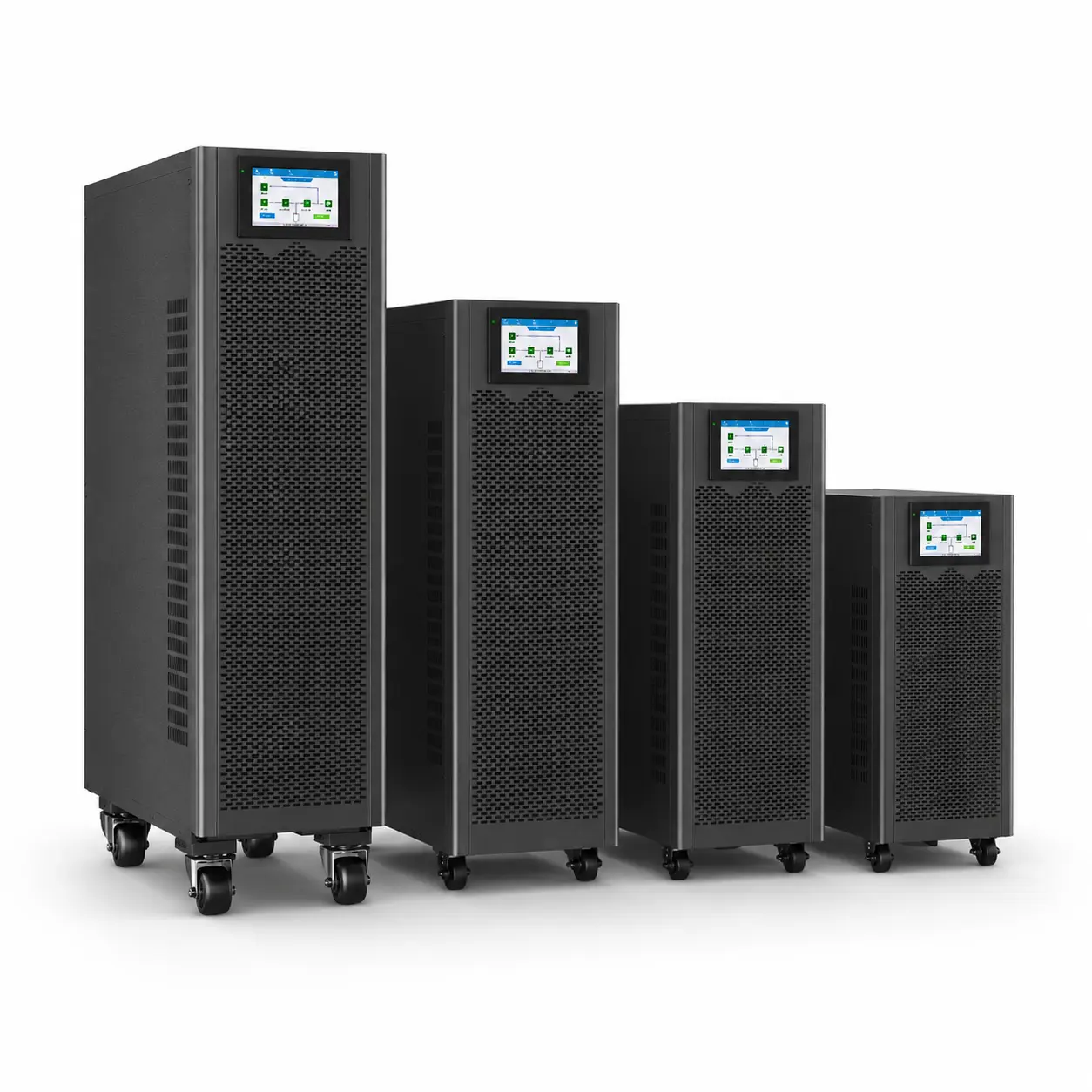
| 15–30 kVA | Medium-sized businesses, printing equipment, automation and production systems |
| 40–80 kVA | Production lines, hospital departments, large server rooms and industrial facilities |
| 100–200 kVA | Factories, data centres, large healthcare facilities and critical infrastructure |
| 200 kVA and above | Large industrial facilities, campuses and high-capacity central systems |
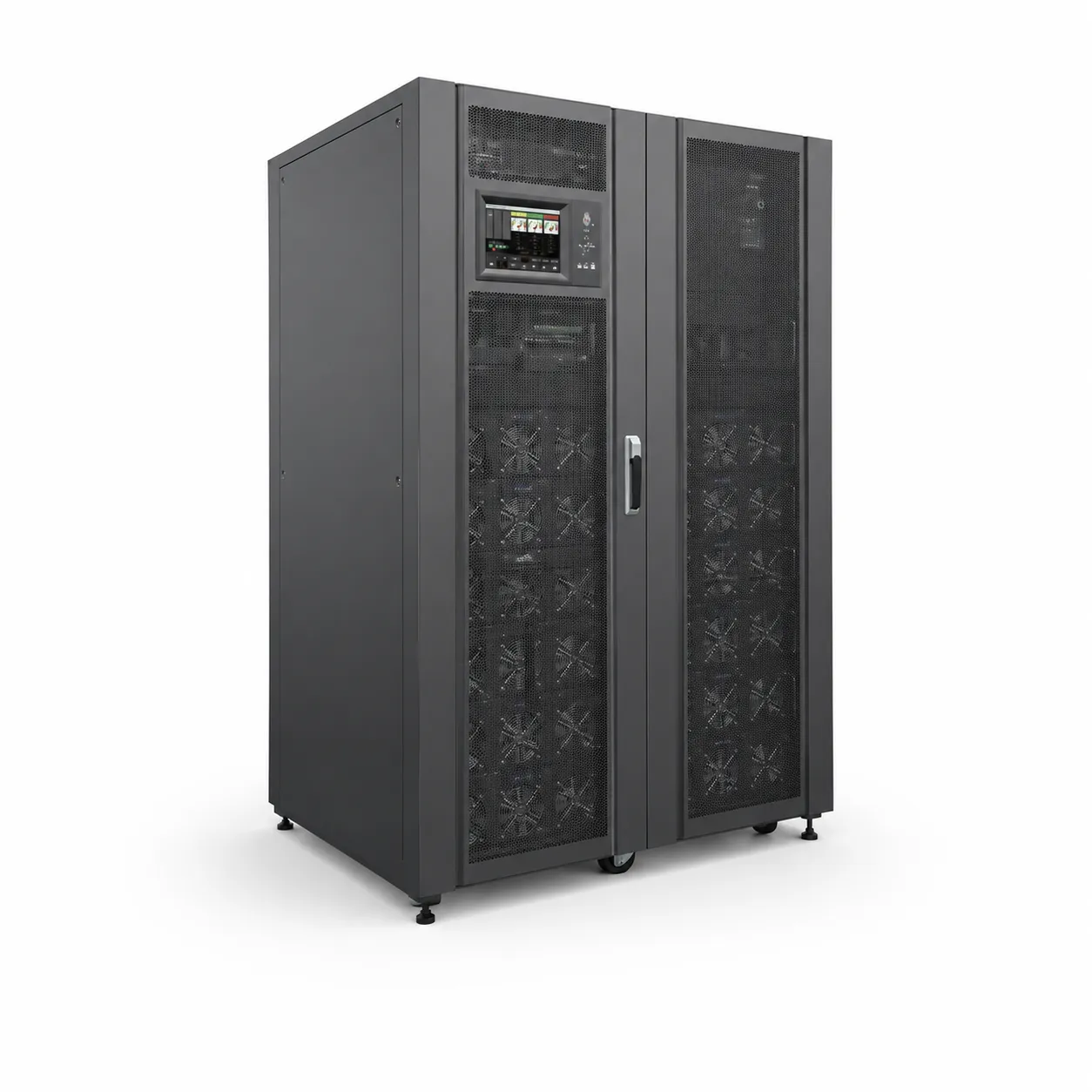
| Modular UPS | Data centres and critical facilities requiring scalability and redundancy |
Should You Choose a Single-Phase or Three-Phase UPS?
The choice between a single-phase and three-phase UPS depends not only on the required power capacity but also on the electrical infrastructure of the facility. Single-phase UPS systems are commonly used for computers, small offices, security systems and low-power server applications.
Three-phase UPS systems are generally preferred for factories, hospitals, large data centres, production machinery and high-power commercial loads. Depending on the project, the input and output configuration may be 1/1, 3/1 or 3/3.
For further information, read our guide covering the differences between single-phase and three-phase UPS systems .
Should You Choose an Online or Line-Interactive UPS?
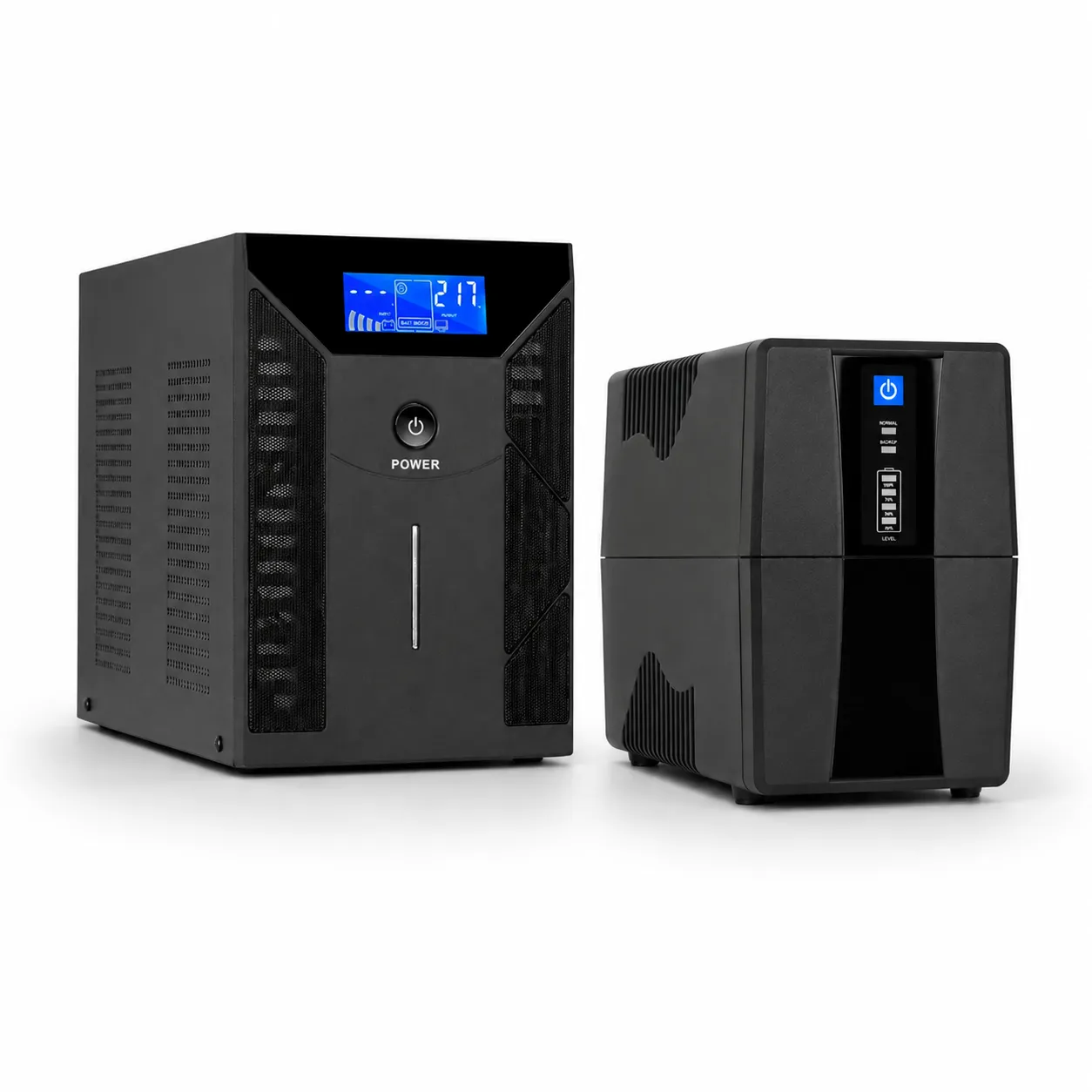
Line-interactive UPS systems can provide an economical solution for computers, modems, security cameras, POS devices and small office equipment. They regulate certain utility voltage fluctuations through an automatic voltage regulation system and transfer to battery operation within a short period when utility power fails.
An online UPS continuously supplies connected equipment through its inverter using double-conversion technology. As a result, no transfer time occurs when utility power fails. Online UPS systems are generally preferred for servers, medical equipment, automation systems, production machinery and applications where power quality is critical.
You can review the technical differences in our online UPS and line-interactive UPS comparison .
How Does Battery Runtime Affect UPS Selection?
UPS power capacity and battery runtime are not the same. The kVA rating indicates the load capacity of the UPS, while the battery system determines how long the connected equipment can continue operating during a power outage.
The same UPS can provide a longer runtime at a lower load and a shorter runtime when operating close to full capacity. Applications requiring extended backup time may use external battery cabinets, higher ampere-hour battery capacities or project-specific battery banks.
The main factors affecting battery runtime include:
- Total load connected to the UPS
- Battery voltage and ampere-hour capacity
- Age and condition of the batteries
- UPS operating efficiency
- Ambient temperature
- Number and configuration of batteries
For further information, read our guide: How Long Does a UPS Run and How Is Battery Runtime Calculated?
Request a technical assessment based on your load list. Send the power ratings of your equipment, electrical phase configuration and required runtime to elsi@elsi.com.tr. The ELSI Power Systems team will help you identify a suitable ELSIPOWER UPS solution.
What Size UPS Is Required for a Computer or Office?
A 1 kVA or 2 kVA UPS may be considered for a small system consisting of a desktop computer, monitor, modem and basic network equipment. In offices with multiple computers, powerful workstations or high-performance graphics cards, the total power consumption must be calculated.
Laser printers can draw significant power during startup. They should therefore not automatically be connected to the same small UPS used for computers. The UPS output waveform should also be checked for compatibility with the computer power supply.
How Should a UPS Be Selected for a Server Room?
A server room load calculation should include not only servers but also switches, routers, storage units, security devices, communication systems and other network equipment. The required runtime should be determined according to whether the servers must shut down safely or remain operational until a generator starts.
Online UPS systems are generally used in server and data centre applications. Modular UPS solutions may be considered when redundancy, scalability and power continuity during maintenance are required.
UPS Selection for Factories and Production Machinery
When calculating UPS capacity for a factory, engineers should assess not only the rated power of the production machine but also its motors, drives, automation panels, PLC systems, control boards and auxiliary equipment. Sudden current demand or regenerative loads may make a basic power calculation insufficient.
In production facilities, an uninterruptible power supply may be used to operate the entire machine, protect only its control system or allow production to stop safely. Each scenario requires a different UPS capacity and battery runtime.
Additional information is available in our UPS selection guide for factories .
Uninterruptible Power Supplies for Printing Machinery
Printing, cutting, plate preparation and digital printing machines can be affected by power outages and voltage fluctuations. A sudden interruption during printing may result in wasted materials, repeated work and delayed deliveries.
When choosing a UPS for printing machinery, the total machine power, operating current, auxiliary units and the time required to stop production safely should be evaluated together. On-site inspection and electrical measurements provide more reliable results for high-power printing equipment.
UPS Selection for Hospitals and Medical Equipment
Hospitals, medical centres, laboratories and diagnostic imaging departments are among the facilities where power continuity is most critical. UPS selection for medical equipment should consider the manufacturer’s technical requirements, load characteristics, electrical infrastructure, required backup time and applicable facility requirements.
Hospital UPS projects must consider not only power capacity but also reliability, redundancy, maintenance access and generator compatibility. Critical healthcare systems should not be sized solely according to an approximate capacity table.
Demand for Uninterruptible Power Supplies in Istanbul
Demand for UPS systems continues to grow in Istanbul’s industrial, manufacturing, healthcare, logistics and printing districts. Business continuity is particularly important for factories and commercial facilities in Beylikdüzü, Esenyurt, Avcılar, Başakşehir and Küçükçekmece.
Production, warehouse and logistics facilities in Büyükçekmece, Silivri and Arnavutköy may require high-capacity online or three-phase UPS systems. Printing, textile and manufacturing businesses in Bağcılar, Güngören, Zeytinburnu and Bayrampaşa may use different UPS capacities according to their load characteristics.
On the Asian side of Istanbul, Kartal, Pendik and Tuzla are home to industrial facilities, shipyards, healthcare organisations, data infrastructure and production companies with critical power requirements. Instead of recommending the same capacity for every facility, the selection should be based on the actual load values of each business.
UPS Solutions for Industrial Facilities Across Türkiye
In Türkiye’s major industrial and manufacturing regions, power continuity directly affects production schedules and business performance. Kocaeli, Bursa, Tekirdağ, Sakarya and Ankara are important centres for automotive, machinery, chemical and organised industrial investments.
Manufacturing machinery, textile facilities, food processing companies, hospitals and data systems in İzmir, Manisa, Konya, Kayseri and Gaziantep may require UPS systems of different capacities. Uninterruptible power systems are also important for industrial, logistics, healthcare and manufacturing operations in Adana, Mersin, Denizli, Eskişehir and Balıkesir.
Regardless of the city, ELSIPOWER UPS selection is based on the facility’s actual load, electrical infrastructure, environmental conditions and service requirements. This approach helps create a system that supports both present requirements and future capacity growth.
Common Mistakes When Choosing a UPS
- Selecting a UPS based only on the Watt rating of the equipment
- Ignoring starting currents and sudden load changes
- Sizing the UPS to operate continuously at maximum capacity
- Failing to check the single-phase or three-phase infrastructure
- Not determining the required battery runtime in advance
- Leaving no additional capacity for future equipment
- Ignoring the differences between online and line-interactive UPS systems
- Overlooking ambient temperature and ventilation requirements
- Failing to consider technical support and preventive maintenance
ELSIPOWER Uninterruptible Power Supply Solutions
ELSI Power Systems offers ELSIPOWER uninterruptible power supply solutions for applications ranging from computers and offices to server rooms, hospitals, factories, printing facilities and large industrial plants.
Available solutions include line-interactive UPS, online UPS, single-phase UPS, three-phase UPS, modular UPS and battery configurations designed for different backup time requirements. Explore the available ELSIPOWER uninterruptible power supplies .
Proper installation, commissioning and regular maintenance are as important as selecting the right product. Learn more about UPS maintenance and technical support services .
Frequently Asked Questions
How do I calculate what size UPS I need?
Calculate the total power drawn by all devices that will operate simultaneously. Power factor, starting current, load type and future expansion should also be considered. The final UPS capacity should be selected after a technical assessment.
How many Watts can a 1 kVA UPS support?
The answer depends on the output power factor of the UPS. A 1 kVA UPS with a 0.9 output power factor can theoretically provide approximately 900 Watts of active power. The UPS should not be operated continuously at its maximum limit, and load characteristics must also be considered.
What size UPS do I need for a computer?
A UPS of approximately 1 kVA may be considered for a standard computer, monitor and modem. Total consumption should be calculated for powerful workstations or systems with multiple computers.
Do servers require an online UPS?
Online UPS systems are generally preferred for critical servers and network equipment because they provide double-conversion operation with no transfer time during a power failure. The final choice depends on the total server load and operating requirements.
Does UPS capacity determine battery runtime?
The kVA rating indicates how much load the UPS can support. Battery runtime depends on the connected load, number of batteries, battery capacity, battery condition and overall system efficiency.
Should a factory use a single-phase or three-phase UPS?
The choice depends on the electrical infrastructure, machine phase configuration and total load. Three-phase UPS systems are more common in high-power industrial applications, but site data should be reviewed before making a final selection.
How much spare UPS capacity should be allowed?
A capacity margin of approximately 20% to 30% may be considered in many applications. Motor-driven or high-starting-current loads may require a different margin based on technical measurements.
Does an uninterruptible power supply require maintenance?
Yes. Batteries, fans, electrical connections, capacitors and electronic components may lose performance over time. Regular maintenance helps identify potential faults and supports reliable UPS operation during a power outage.
Conclusion: Why Is Choosing the Right UPS Important?
Choosing an uninterruptible power supply involves more than answering the question “What size UPS do I need?” The actual equipment load, load characteristics, phase configuration, battery runtime, installation environment and future expansion plans must be evaluated together.
An undersized UPS may compromise system reliability, while an unnecessarily large system can increase investment costs. A properly designed ELSIPOWER UPS system supports business continuity during power outages, helps protect sensitive equipment and reduces the risk of unplanned downtime.
Let us help you identify the right uninterruptible power supply for your business. Contact ELSI Power Systems at +90 212 210 75 51, send your load list to elsi@elsi.com.tr, or visit us at Yakuplu, 200. Sk., ERAKIN Plaza No:8A/1, 34524 Beylikdüzü, Istanbul, Türkiye .