Contents
- What Is a Rectifier?
- What Does a Rectifier Do?
- How Does a Rectifier Work?
- What Is a Battery Charger Rectifier? Float and Boost Charging
- Types of Rectifier
- Where Are Rectifiers Used?
- What Is the Difference Between a Rectifier and a UPS?
- Features a Good Rectifier Should Have
- What to Consider When Choosing a Rectifier
- Why Is Rectifier Maintenance Important?
- Frequently Asked Questions About Rectifiers
Reliable use of electrical energy is critical in many areas, from industrial plants to telecommunication infrastructure. The alternating current (AC) supplied by the grid cannot directly meet the needs of every piece of equipment. Protection relays in substations, communication equipment in base stations and control panels in factories run on direct current (DC) and often have to keep working even at the moment the power fails.
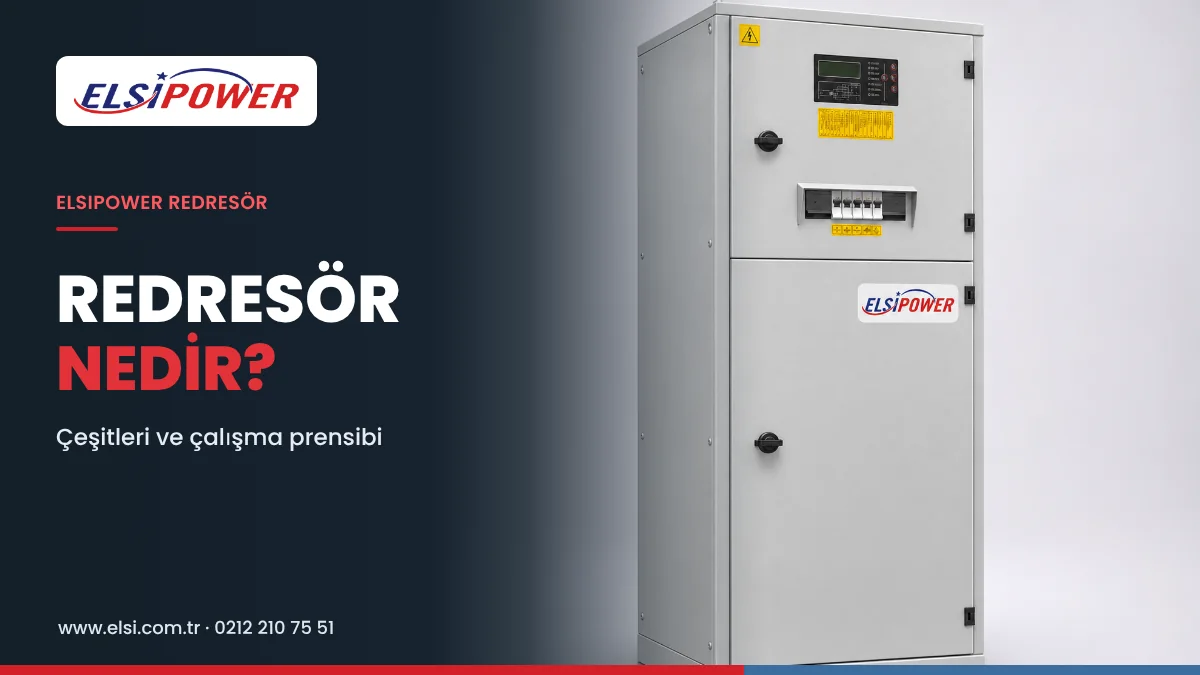
The device that meets this need is the rectifier. In this guide we explain in plain language what a rectifier is, how it works, the role of battery charger rectifiers, the types of rectifier, where they are used and how they differ from a UPS.
What Is a Rectifier?
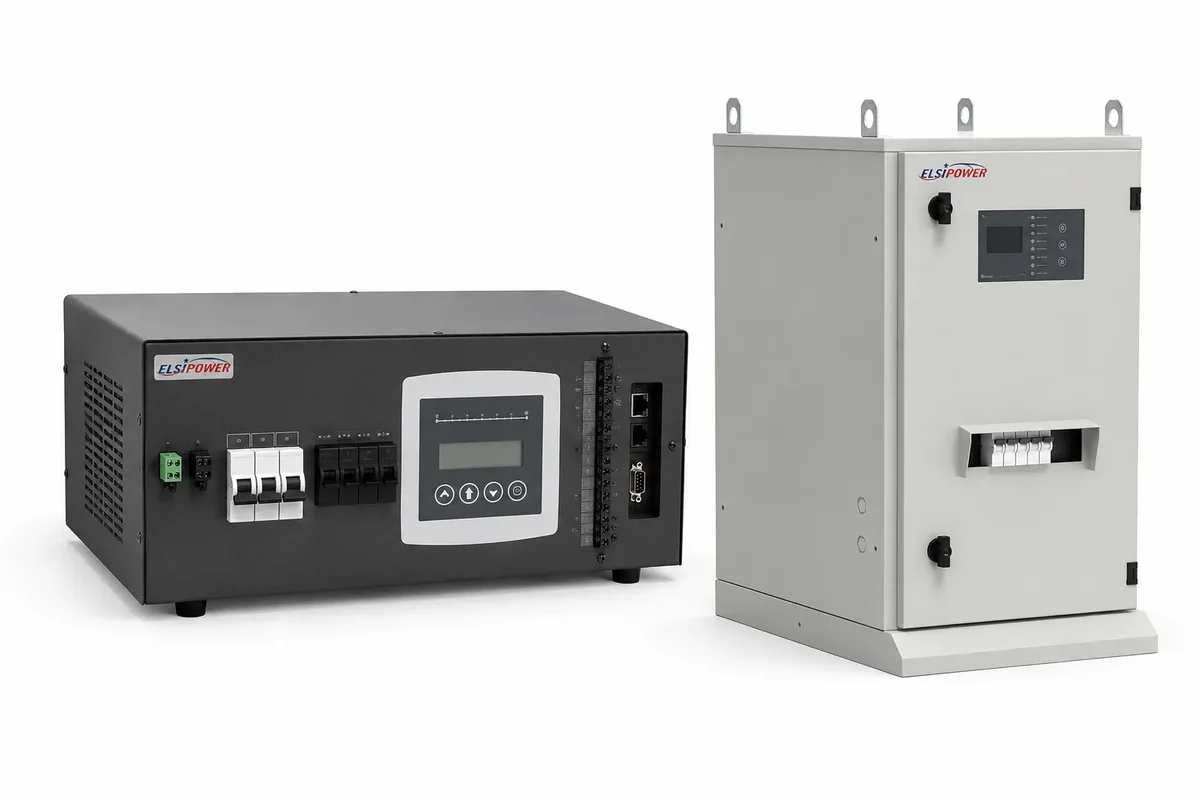
A rectifier is a power electronics system that converts alternating current (AC) from the mains into direct current (DC). In alternating current the direction of voltage and current changes periodically, while in direct current the current flows in one direction. Control systems, communication infrastructure and batteries run on this unidirectional energy.
Industrial rectifiers are not limited to AC/DC conversion. They keep the output voltage constant, limit current, manage battery charging and report faults. In industry these devices are usually called battery charger rectifiers or DC power systems.
What Does a Rectifier Do?
The basic task of a rectifier is to provide the required DC energy at the correct voltage and current. Its main functions are:
- Converting AC mains energy into stable DC energy
- Continuously supplying DC devices and control systems
- Charging battery banks in a controlled way and keeping them full
- Keeping the output voltage within the set range and limiting current
- Protecting against short circuit, overload and overheating
- Together with the battery bank, ensuring DC loads are supplied without interruption during outages
For example, in a substation the rectifier supplies the protection relays and breaker control circuits in normal operation and keeps the battery bank charged. When the mains fails, the battery bank continues to supply the DC loads with no transfer time.
How Does a Rectifier Work?
The operation of a battery charger rectifier can be summarised in four steps:
- AC input: Depending on its rating, the rectifier is supplied from a single-phase or three-phase mains. The input voltage and frequency must match the device’s specifications.
- AC/DC conversion: Alternating current is rectified by power electronics. Depending on the technology, diodes, thyristors or high-frequency switching circuits are used.
- Filtering and control: Output ripple is filtered; the control circuit holds the output voltage at the set value and prevents the current from exceeding the set limit.
- DC load supply and battery charging: The output is connected to both the DC loads and the battery bank. With the mains normal, the rectifier supplies the loads and keeps the battery charged; during an outage the battery is already in parallel on the DC bus, so the loads are supplied without interruption.
When power returns, the rectifier supplies the loads and recharges the discharged battery at the same time.
What Is a Battery Charger Rectifier? Float and Boost Charging
A battery charger rectifier is a power system that supplies the correct DC voltage and current to battery banks. In industrial applications, simply charging the battery is not enough; charging conditions must suit the battery chemistry, capacity, ambient temperature and the manufacturer’s recommendations. Rectifiers therefore operate in different charging modes:
| Mode | When? | Purpose |
|---|---|---|
| Float charge | Normal operation, battery full | Compensate for self-discharge and keep the battery full without overcharging |
| Boost charge | After a long outage, commissioning, equalisation | Recharge suitable battery types faster, following the manufacturer’s instructions |
| Current limiting | When a discharged battery starts charging | Protect the battery and rectifier from overcurrent |
The same charging method cannot be applied to every battery. VRLA (maintenance-free), vented lead-acid, nickel-cadmium and lithium batteries have different charging voltages and requirements; the boost voltage and duration must be set for the battery type. ELSIPOWER rectifiers feature smart automatic battery charge control and a boost charge input.
Types of Rectifier
Rectifiers can be classified by output voltage, technology and application.
| Rectifier type | Typical use |
|---|---|
| 24V DC rectifier | Automation systems and control panels |
| 48V DC rectifier | Telecom and communication infrastructure |
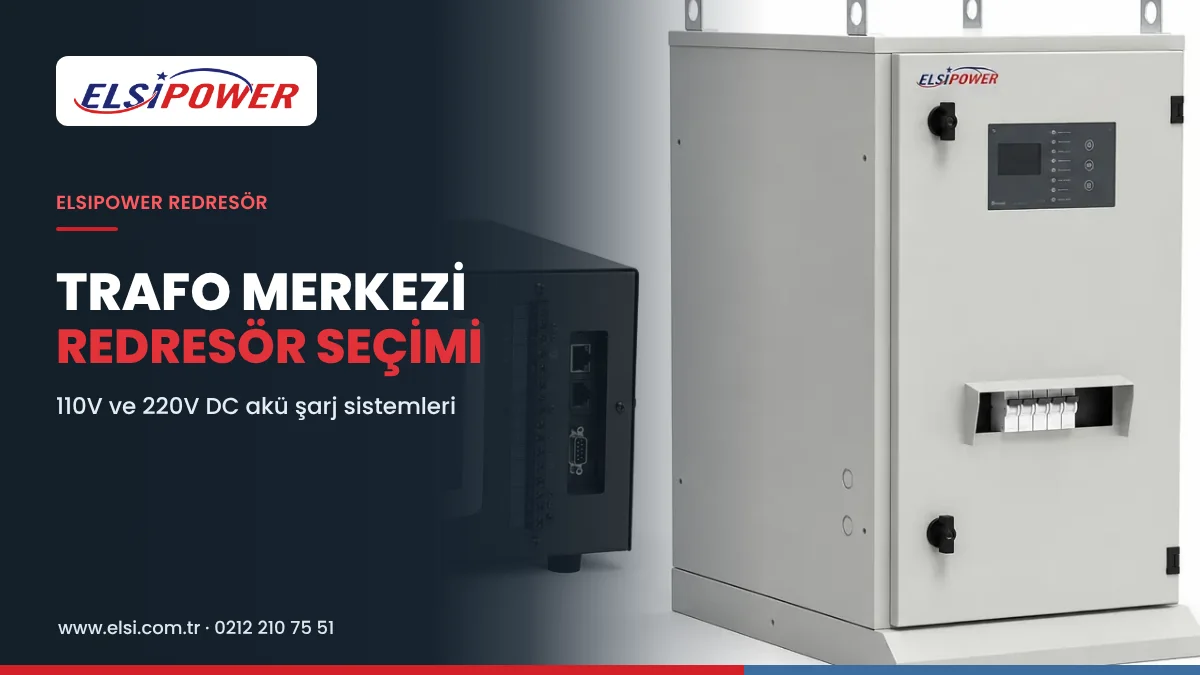
| 110V DC rectifier | Substations, protection and control systems |
| 220V DC rectifier | Power plants and switchgear systems |
| Battery charger rectifier | DC load supply and controlled charging of battery banks |
| Modular rectifier | Scalable and redundant DC power systems |
The 24V, 48V, 110V and 220V values are the nominal system voltages; actual operating and battery charging voltages vary with the system design and battery type. In terms of technology, thyristor-controlled rectifiers and high-frequency switch-mode (SMPS) rectifiers stand out. We explain which voltage and current you need and how they affect the price in our article Rectifier Prices 2026 and Selection Guide.
Where Are Rectifiers Used?
Substations and power plants
Protection relays, breaker trip and close mechanisms and control systems need a reliable DC supply. The rectifier supplies these loads and keeps the backup battery bank charged. For details, see our article Rectifier Selection for Substations.
Telecommunication systems
Base stations, communication centres and telecom infrastructure commonly use nominal 48V DC systems. The rectifier supplies the communication equipment and manages battery backup.
Industrial automation
Production lines, control panels, SCADA and remote monitoring systems and industrial machine control systems can be supplied by a rectifier.
Transport and critical infrastructure
Railway signalling, airports, water treatment plants and pumping stations, oil, gas and mining facilities, fire detection and emergency announcement systems, and marine and ship power systems are also common applications. Here, fault monitoring and ease of maintenance matter as much as the reliability of the power source.
What Is the Difference Between a Rectifier and a UPS?
Rectifiers and uninterruptible power supplies (UPS) are often confused; both work with batteries and provide power during outages. The key difference is the type of load they supply:
| Feature | Rectifier | UPS |
|---|---|---|
| Main function | Convert AC to DC and supply DC loads | Ensure power continuity for AC loads |
| Output | DC | AC |
| Typical load | Protection relays, breaker coils, telecom and control systems | Computers, servers, medical devices, lighting |
| Transfer during outage | None, because the battery is in parallel on the DC bus | None with an online UPS; a short transfer time with a line-interactive UPS |
A UPS also contains a rectifier stage, but an industrial battery charger rectifier and a complete UPS are not the same device. An uninterruptible power supply (UPS) is used for the AC supply of servers, while a battery-backed rectifier is used for a substation’s DC control system. Many facilities have both.
Features a Good Rectifier Should Have
- Constant voltage output: The output voltage should stay at the set value even when mains and load change.
- Current limiting: The battery and rectifier must be protected from overcurrent when a discharged battery starts charging.
- Protection functions: Protection against short circuit, overload, overtemperature and reverse polarity.
- Fault signal output: The ability to pass faults to SCADA or the control system.
- LED status and fault indicators: Operating status visible at a glance on site.
- Smart fan-controlled cooling: Avoiding unnecessary fan operation and dust build-up.
- Wide input voltage range and rugged design: Reliable operation in heavy industrial environments.
The ELSIPOWER rectifier series offers all of these features and is engineered together with the battery bank.
What to Consider When Choosing a Rectifier
- Nominal DC voltage of the system
- Continuous and momentary (short-duration) load current
- Battery type and capacity
- Required backup and recharge time
- Input voltage and phase arrangement
- Protection, alarm and remote monitoring requirements
- Installation environment and cooling conditions
- Technical service and maintenance options
When renewing an existing system, the voltage and current on the old rectifier’s rating plate may not be enough; the condition of the battery bank and the plant’s current load requirements should also be assessed.
Why Is Rectifier Maintenance Important?
Rectifiers are designed to run continuously for long periods, but that does not mean they need no maintenance. Most problems in a DC system develop silently and only show up when the power fails. Periodic maintenance checks the output voltage, charging current, battery connections, cooling system, alarm circuits and protection equipment, and measures the health of the battery bank. At ELSIPOWER we provide site surveys, installation and periodic maintenance for rectifier and battery bank projects; see our technical service page for details.
Frequently Asked Questions About Rectifiers
Does a rectifier convert AC to DC?
Yes. The basic task of a rectifier is to convert alternating current into direct current. Industrial models also provide voltage control, current limiting and battery charge management.
Does a rectifier work when the power goes out?
A rectifier cannot keep delivering output when the mains at its input fails. In a DC power system designed with a battery bank, however, the loads continue to be supplied from the battery during the outage. That is why rectifiers in critical systems such as protection, communication and control are always used with a battery bank.
Is a rectifier the same as a battery charger?
No. A battery charger is designed only to charge the battery. A battery charger rectifier continuously supplies DC loads while keeping the battery on float charge, and has charge control suited to the battery chemistry plus alarm and protection functions.
What voltages do rectifiers come in?
24V, 48V, 110V and 220V DC systems are common in industrial applications. Rectifiers with other voltage and current ratings can also be used depending on the project.
How can a rectifier fault be recognised?
An output voltage outside the normal range, batteries not charging, a fault LED or alarm, overheating and unexpected shutdowns can indicate a fault. An accurate diagnosis requires measurements by qualified technical staff.
Let’s determine your rectifier requirement together
As ELSİ Güç Sistemleri, under our ELSIPOWER brand we provide rectifier and battery bank solutions for energy facilities, telecom infrastructure, industrial plants and critical DC power applications. Send us your system voltage, load information and expected backup time, and we will recommend a suitable configuration. 0212 210 75 51 · elsi@elsi.com.tr