Contents
- Which Store Systems Should Be Protected by a UPS?
- Why Are Refrigerated Cabinets Not Put on the UPS?
- Central UPS or One UPS per Till?
- What Size UPS? A Worked Example
- How Long Should the Battery Last?
- A Standard Solution for Chain Stores
- The Hidden Cost of Outages: Data and Hardware
- Recommendations for Cold Rooms and Display Fridges
- Planning for New Stores
- Frequently Asked Questions
When the power fails in a grocery store, the tills are the first thing to stop. When the tills stop, sales stop; customers with full baskets may leave rather than wait. Even if the outage lasts only a few seconds, restarting till PCs and the server, loading software and re-establishing connections takes minutes. A camera system that shuts down during the outage also leaves a security gap.
In this article we share what to consider when choosing an uninterruptible power supply (UPS) for grocery stores, supermarkets and chain stores, the right type of UPS and a worked sizing example.
Which Store Systems Should Be Protected by a UPS?
| System | UPS? | Note |
|---|---|---|
| Till PCs, POS, cash registers | Yes | Top priority to keep selling |
| Label scales | Yes | Deli, produce and butcher counters |
| Stock / ERP server | Yes | Against data loss and corruption |
| Modem, switch, Wi-Fi | Yes | Card payments and head-office link |
| Cameras and alarm | Yes | Continuous security recording |
| Refrigerated cabinets, freezers | No | Better supplied by the generator |
| General lighting, air conditioning | No | Emergency lighting is planned separately |
Why Are Refrigerated Cabinets Not Put on the UPS?
Display fridges and freezers draw high power, their compressors have high starting currents and they run continuously. Supplying them from a UPS would require a very large UPS and battery bank, which is not efficient in cost or space. The right approach for the cold chain is to back up refrigeration with a generator and protect tills and information systems with a UPS. The UPS keeps the tills running until the generator takes over. See can a UPS and generator be used together for details.
Central UPS or One UPS per Till?
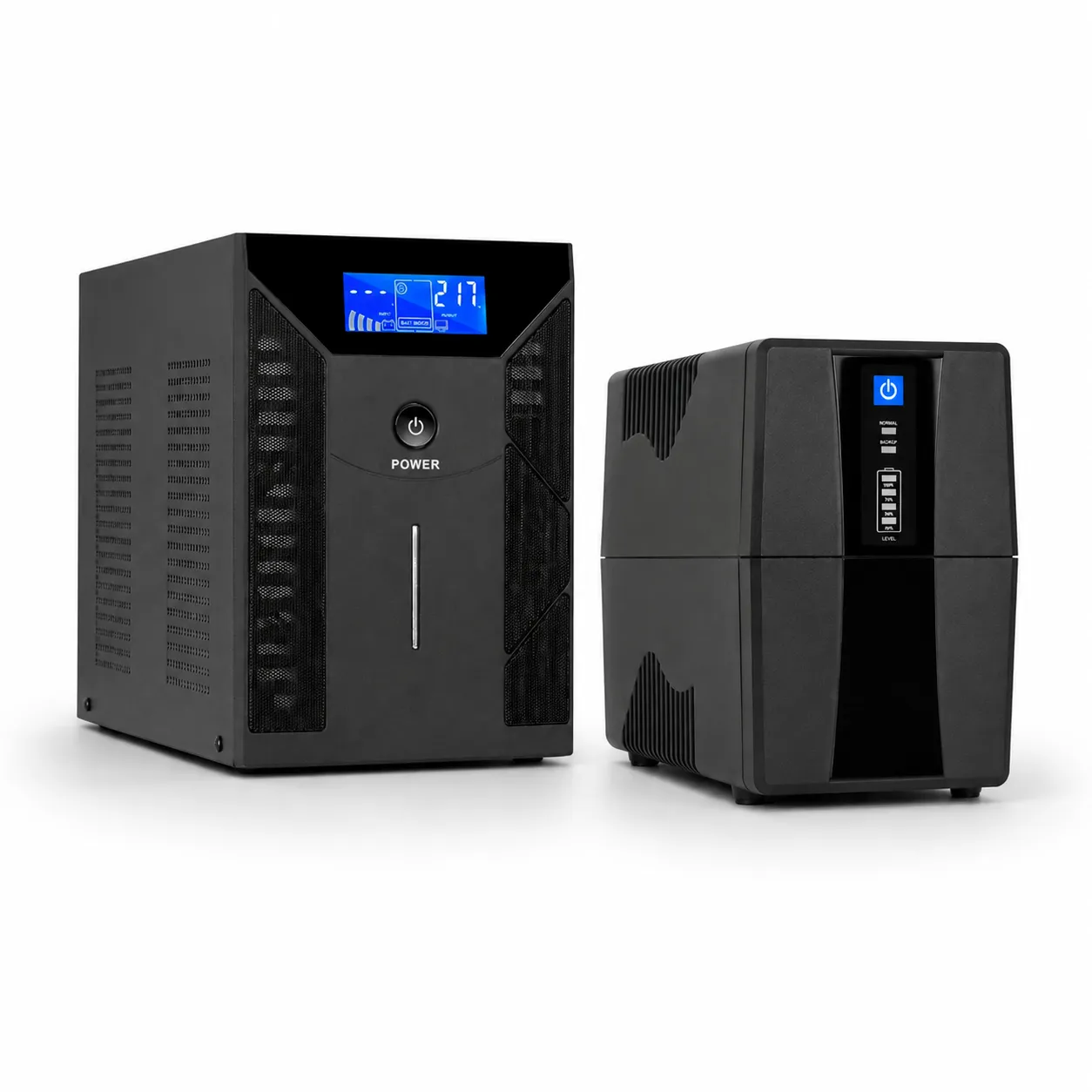
- Small UPS per till: In small stores with 1–2 tills, a 1 kVA line-interactive UPS per till is a practical solution. As the number of units grows, tracking and replacing batteries becomes harder.
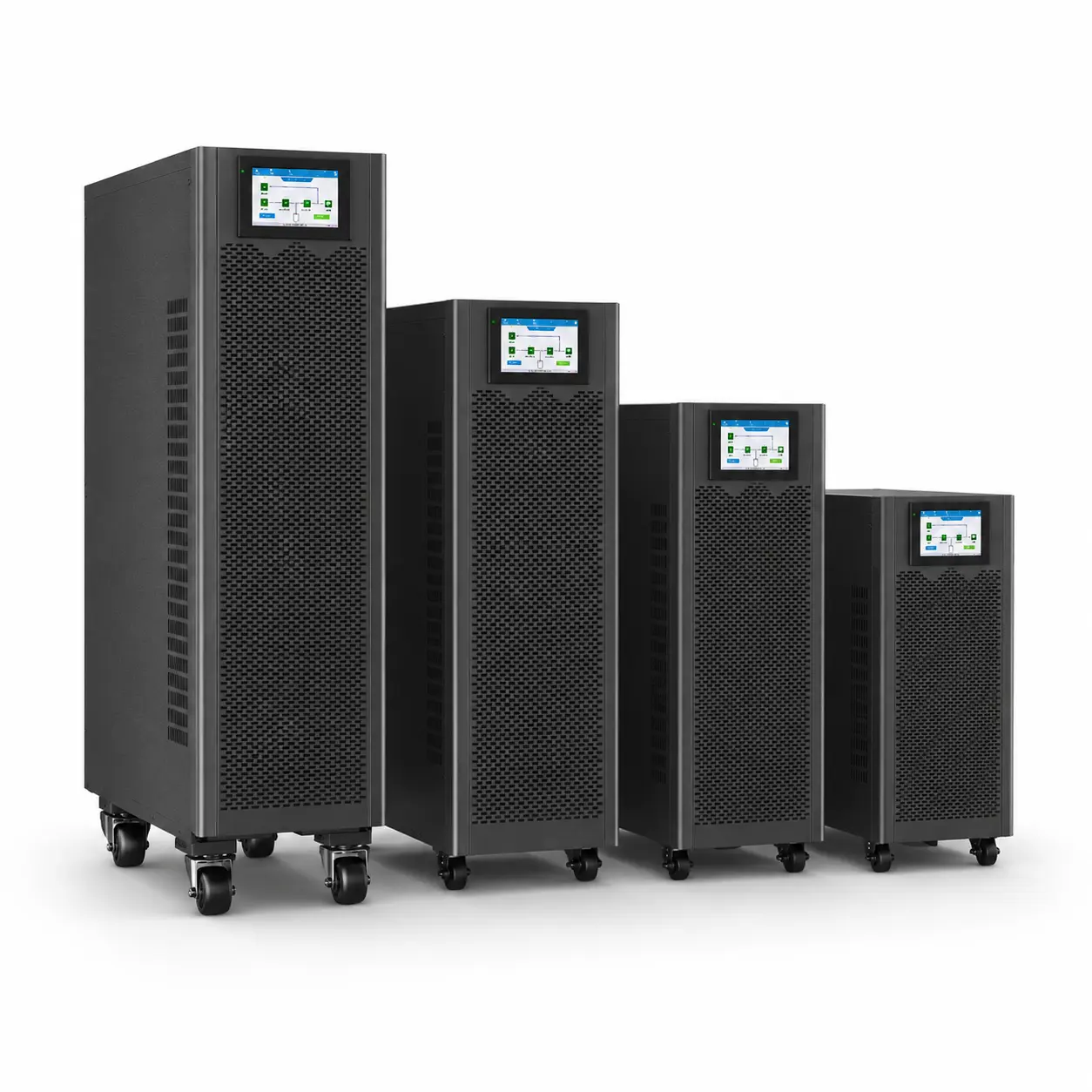
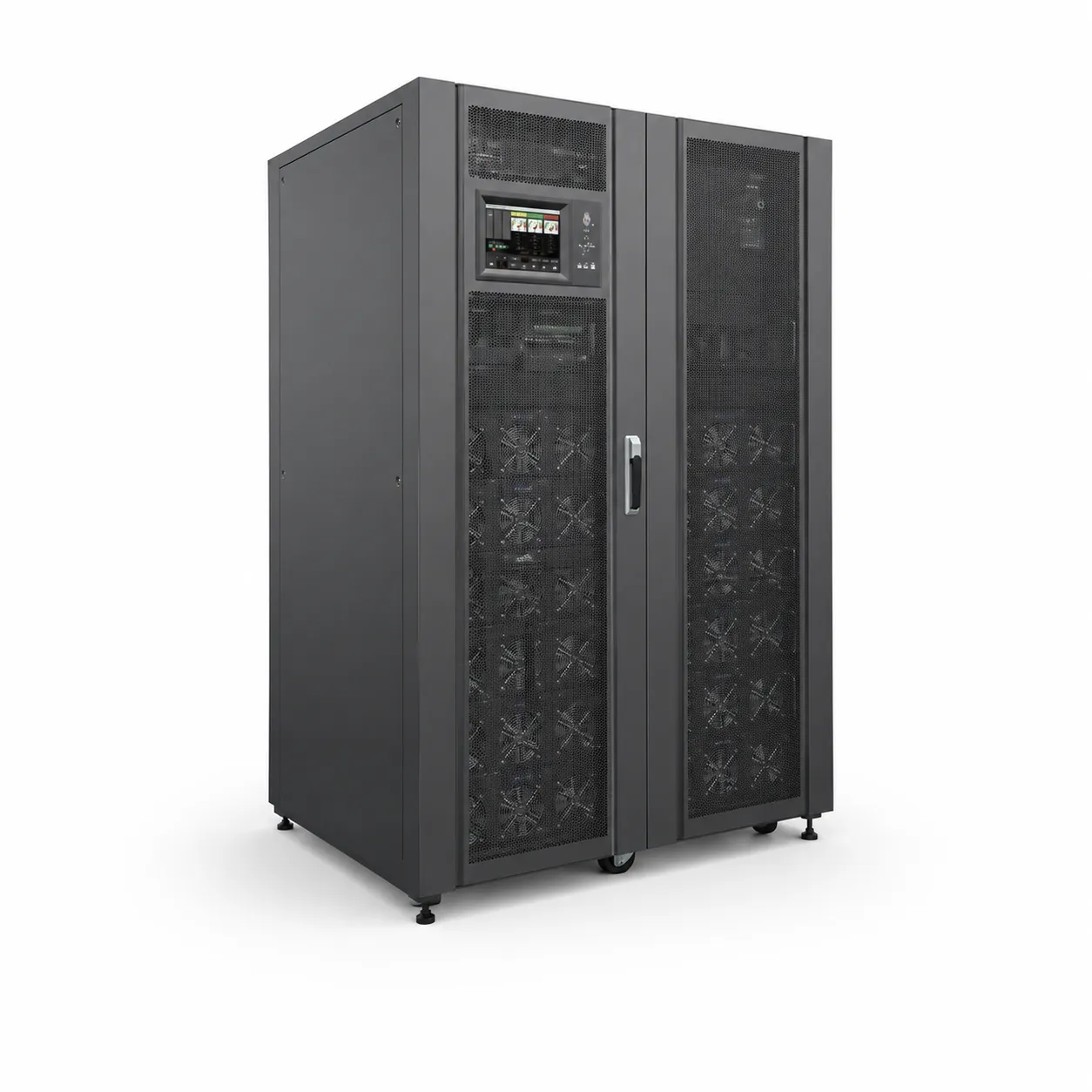
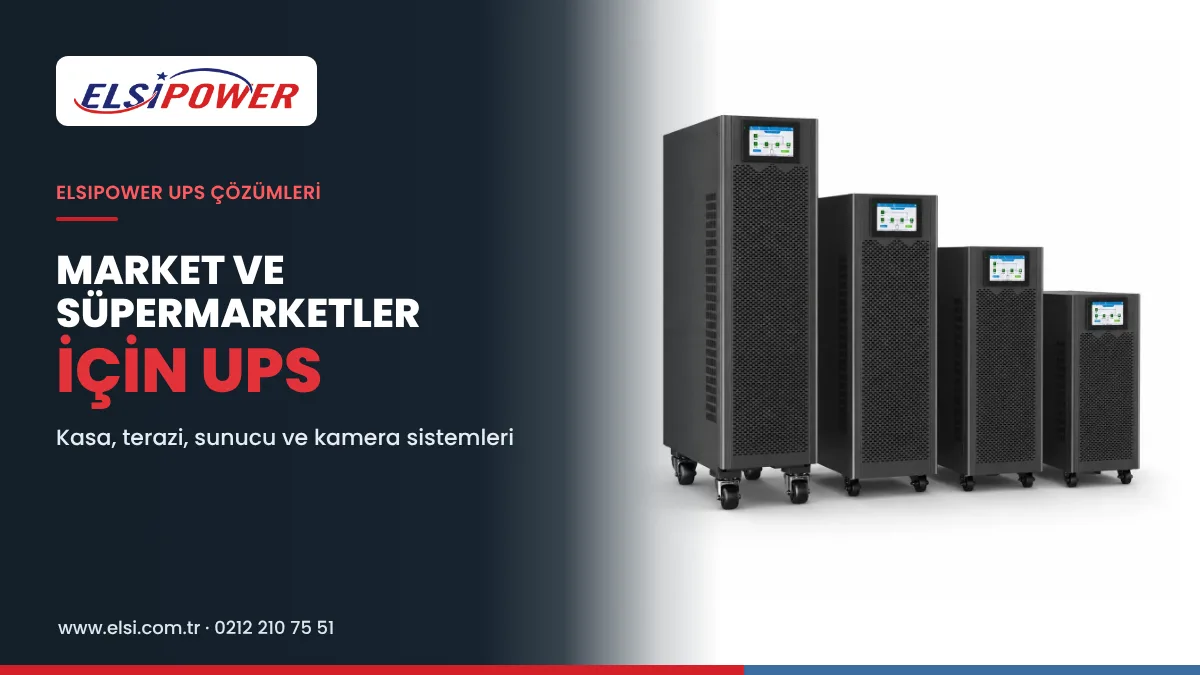
- Central online UPS: Tills, scales, server and network are supplied from a dedicated UPS circuit, giving single-point monitoring, one battery bank and longer runtime. This usually makes more sense for stores with 3 or more tills. Small and medium stores use a single-phase online UPS, large supermarkets a three-phase online UPS.
What Size UPS? A Worked Example
| Load | Estimated power |
|---|---|
| 4 tills (PC, display, printer, POS) 4 × 200 W | 800 W |
| 2 label scales (2 × 50 W) | 100 W |
| Stock server | 300 W |
| Modem, switch, Wi-Fi | 100 W |
| Camera recorder and cameras | 150 W |
| Total | 1,450 W |
1,450 W ÷ 0.9 ≈ 1.6 kVA; with a 25% safety margin ≈ 2 kVA. Allowing for extra tills in future, a 3 kVA online UPS is recommended for this store. We explain the method in detail in what size UPS should I buy.
How Long Should the Battery Last?
Stores with a generator need 10–15 minutes. Neighbourhood stores without a generator may aim for 30–60 minutes so that sales continue through short outages and the day’s records can be closed during long ones; in that case external batteries are added to the UPS.
A Standard Solution for Chain Stores
Using the same UPS model in every branch of a chain simplifies spare parts, battery replacement and maintenance planning, and a periodic maintenance programme can be set up according to the number of branches. At ELSIPOWER we provide site survey and design, installation and technical service together.
The Hidden Cost of Outages: Data and Hardware
Lost sales when tills stop are the visible cost. The hidden costs are often greater:
- Data corruption: If the stock server or a till PC shuts down while writing, database files can be corrupted, leaving end-of-day reports and stock counts inconsistent.
- Hardware faults: Frequent on-off power causes failures in power supplies, hard disks, printers and switches.
- Technical support time: Time spent on a till that won’t start or a POS that won’t connect after an outage is a serious loss at busy hours.
A UPS reduces these risks with a single investment. Systems never shut down in short outages, and in long ones the server and tills can be shut down in an orderly way.
Recommendations for Cold Rooms and Display Fridges
Even without putting refrigeration on the UPS, you can be prepared for outages:
- Plan a generator of suitable capacity for cold rooms and freezers; the UPS keeps the tills running meanwhile.
- Connect refrigeration control panels and temperature alarm devices to a small UPS so that temperature logging continues during an outage.
- If mains voltage is low or unstable, consider a voltage regulator at the site entry to protect compressors.
Planning for New Stores
When opening a new store, including the UPS in the electrical design from the start is the most efficient approach. If till circuits, the server room and network cabinets are designed to be supplied from a separate UPS panel, there are no later costs for new cabling or panel changes. Spare outputs should be left in UPS capacity and the panel so tills can be added as the store grows.
Frequently Asked Questions
Is it necessary to put label scales on the UPS?
Yes. If scales shut down in an outage, counter sales stop; sudden outages can also affect a scale’s settings and memory.
How often do the batteries in per-till UPS units need replacing?
Usually every 3–5 years depending on conditions. A warm, dusty environment next to the tills can shorten this.
Where in the store should the UPS be installed?
In a cool, dry, ventilated area closed to customers, usually the electrical or system room next to the stockroom.
Why do till PCs shut down even though they are on a UPS?
The UPS battery runtime may have run out, the batteries may be weak or the UPS may be overloaded. A load measurement and battery test should be carried out.
Is it possible to rent a UPS for a store?
For short-term needs such as store refurbishment, temporary sales points or campaign periods, you can consider our UPS rental option.
A UPS solution for your store
Tell us how many tills you have and which systems you want to protect; we will calculate the right online UPS capacity and battery runtime for your store and plan the installation. You can call us on 0212 210 75 51 or send an email to elsi@elsi.com.tr.