Contents
- Which Areas in Healthcare Facilities Should Be Protected by a UPS?
- Which Type of UPS Should Be Used?
- Redundancy: Is One UPS Enough?
- Worked Example: A Small Private Clinic
- How Do the Generator and UPS Work Together?
- Maintenance and Testing
- Dental Clinics, Dialysis and Imaging Centres
- Power Quality and Harmonics
- Load Analysis Before Installation
- Frequently Asked Questions
In healthcare facilities, unlike other sectors, a power outage directly affects patient safety. A monitor in intensive care, a device in the operating theatre or the hospital information system (HIS) stopping even for a few seconds is unacceptable. Generators start after an outage, but the system that bridges those few seconds and cleans the power is the uninterruptible power supply (UPS).
In this guide we share what to consider when choosing a UPS for hospitals, outpatient centres and private clinics, the right UPS architecture and a sizing example for a small clinic.
Which Areas in Healthcare Facilities Should Be Protected by a UPS?
| Area / system | Effect of an outage |
|---|---|
| Intensive care and operating theatre equipment | Disruption of patient monitoring and treatment |
| Imaging (X-ray, CT, MRI peripherals) | Interrupted scans, risk of equipment faults |
| Laboratory analysers | Loss of tests and samples |
| HIS servers and network infrastructure | Registration, appointment, prescription and results systems stop |
| Nurse call, announcement and security systems | Loss of communication and security |
| Vaccine and medicine refrigerators | Break in the cold chain |
How large imaging equipment is supplied by a UPS is determined by the equipment manufacturer’s recommendations; often the device’s control and computer units are put on the UPS.
Which Type of UPS Should Be Used?
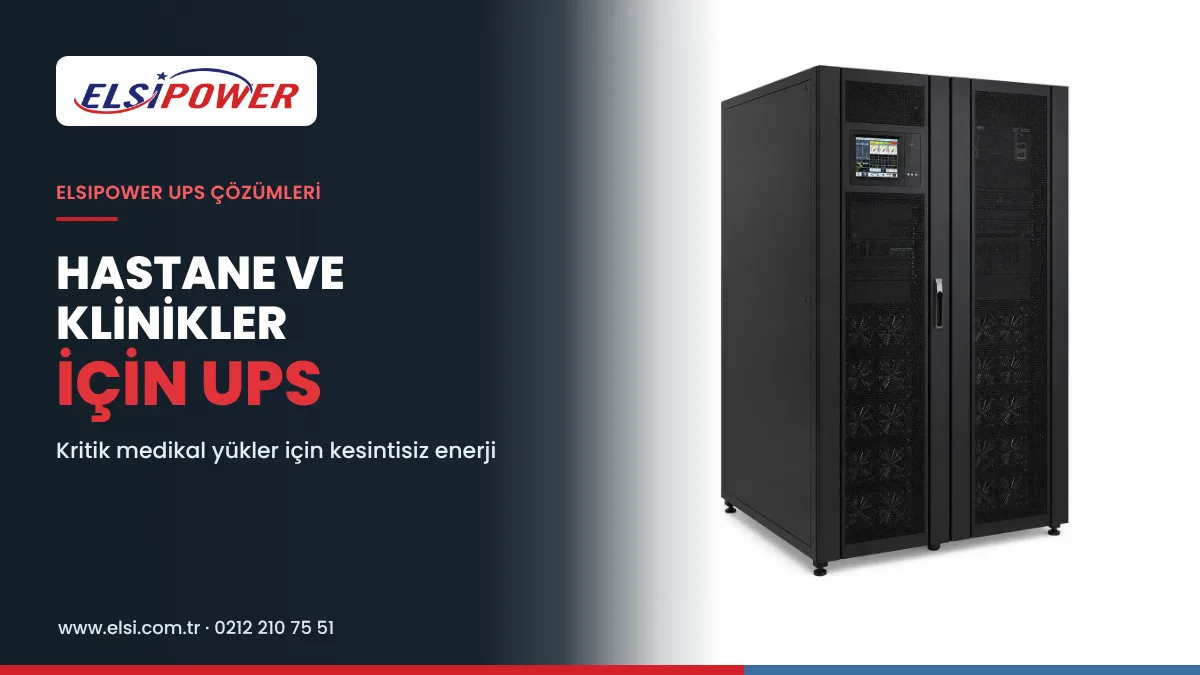
The preferred architecture in healthcare is the online (double-conversion) UPS. Loads are always supplied from the inverter; there is no transfer time when the mains fails and the output is a pure sine wave. Voltage and frequency fluctuations while the generator starts never reach medical equipment.
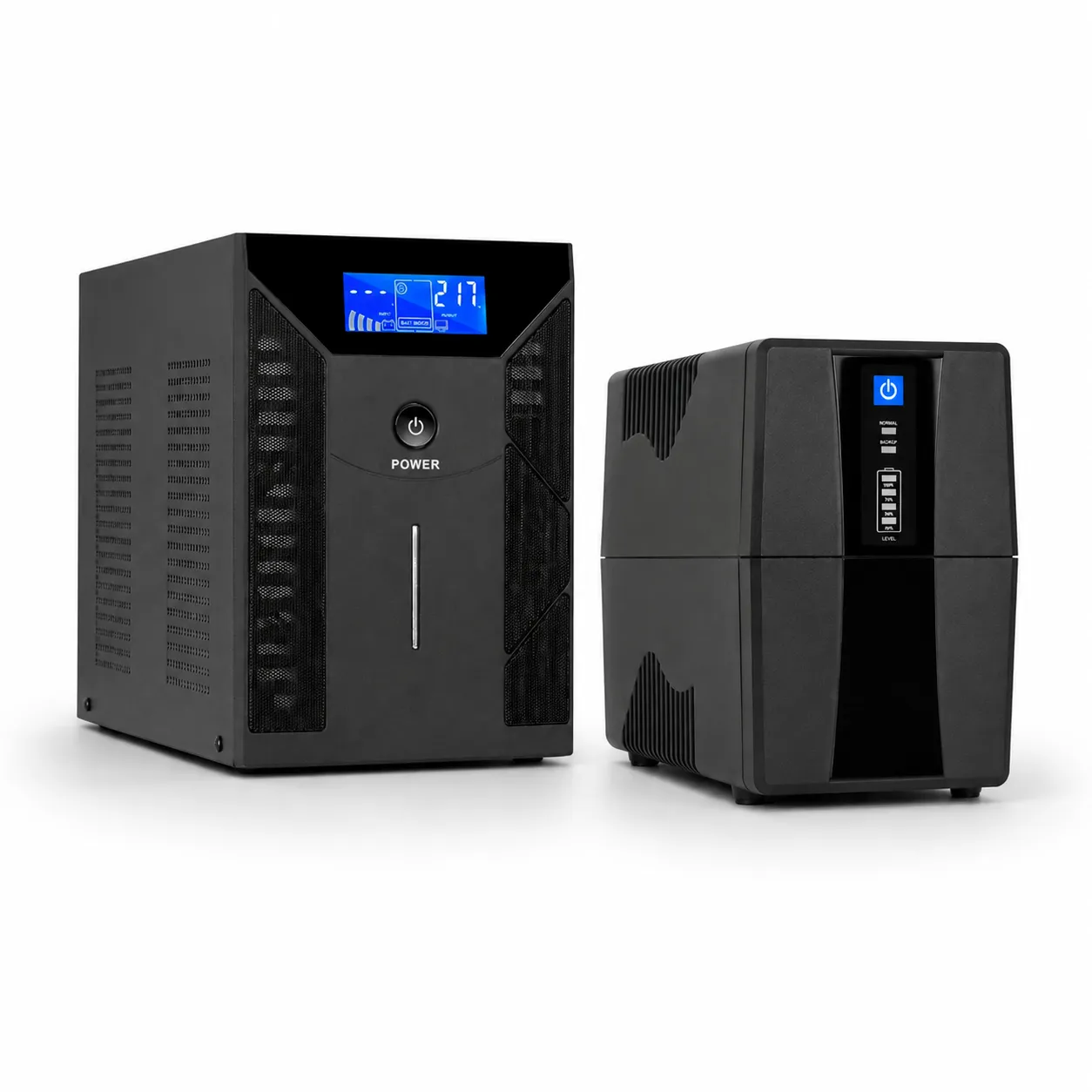
- Private clinics, outpatient and dental clinics: 3–10 kVA single-phase online UPS.
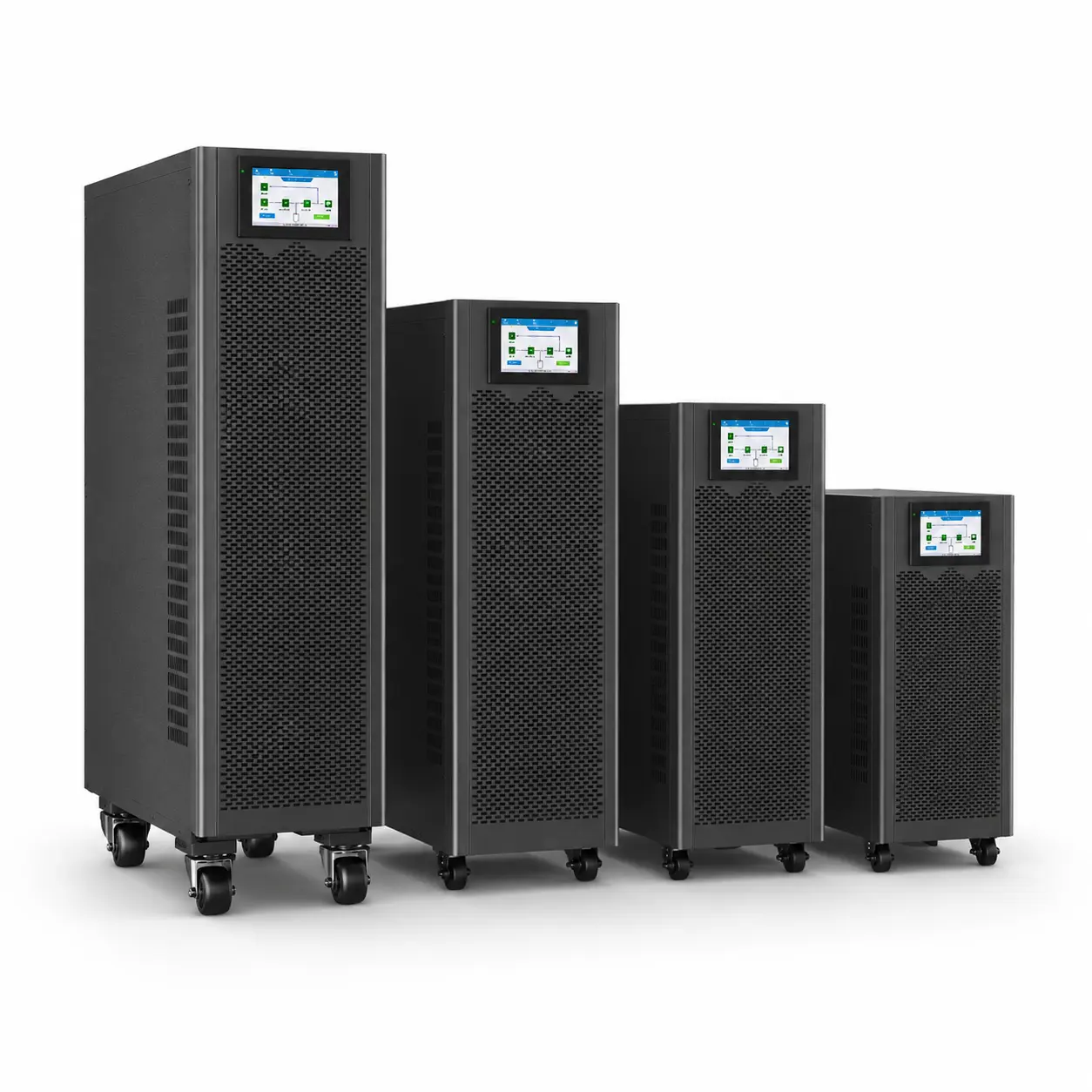
- Medium-sized hospital blocks: 10–80 kVA three-phase online UPS.
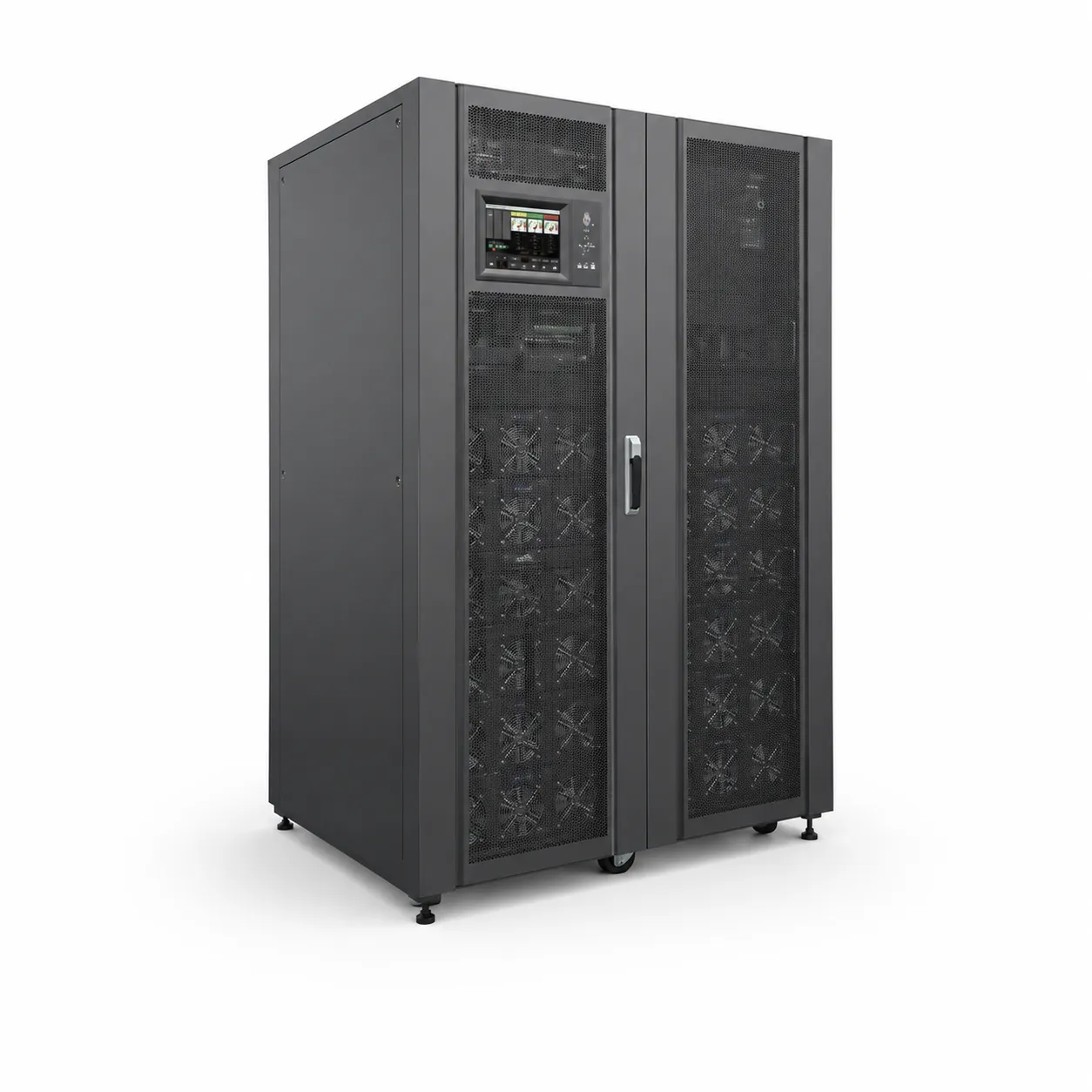
- Large hospitals and data centres: N+1 redundant modular UPS with hot-swappable modules.
Redundancy: Is One UPS Enough?
In critical areas, a single UPS failure means the whole area loses power. Large facilities therefore consider:
- N+1 modular UPS: If one module is out of service, the remaining modules carry the load.
- Dual UPS with a static transfer switch: A static transfer switch (STS) that transfers between two UPS sources within milliseconds prevents a single point of failure.
- Maintenance bypass: Loads stay powered while the UPS is being serviced.
Worked Example: A Small Private Clinic
| Load | Estimated power |
|---|---|
| HIS / registration server | 500 W |
| Network devices (modem, switch, Wi-Fi) | 150 W |
| 6 computers (6 × 120 W) | 720 W |
| Ultrasound unit | 300 W |
| Vaccine / medicine refrigerator | 150 W |
| Total | 1,820 W |
1,820 W ÷ 0.9 ≈ 2 kVA; with a 25% safety margin ≈ 2.5 kVA. A 3 kVA online UPS suits this clinic. At hospital scale, a load analysis is carried out floor by floor and block by block, and a three-phase or modular solution is planned. We explain the general method in what size UPS should I buy.
How Do the Generator and UPS Work Together?
After a mains failure it can take from a few seconds to a few minutes for the generator to start and stabilise. During this time the UPS carries the critical loads; once the generator is running, the UPS is supplied from it and recharges its batteries. The generator must be sized to match the UPS input power and charging requirement.
Maintenance and Testing
In healthcare, being sure that the UPS will work during an outage is as important as the UPS itself. Periodic maintenance includes battery capacity tests, alarm and bypass tests, with measurements recorded. At ELSIPOWER we provide 24/7 technical service and periodic maintenance.
Dental Clinics, Dialysis and Imaging Centres
Each healthcare facility has different needs. A few examples:
- Dental clinics: Unit control boards, digital X-ray sensors, the panoramic imaging PC and the patient records system go on the UPS. Compressor and suction motors are usually kept off the UPS.
- Dialysis centres: An outage during treatment makes it harder to complete the session safely. Dialysis machines and the control units of the water treatment system are protected by an online UPS in line with manufacturer recommendations.
- Imaging centres: Equipment workstations, image archive (PACS) servers and network infrastructure are supplied by the UPS. For the equipment’s main power unit, the manufacturer’s specification applies.
- Medical centres and outpatient clinics: Registration, laboratory, ultrasound and ECG equipment and network infrastructure can be supplied by a single central online UPS.
Power Quality and Harmonics
In hospitals, many electronic devices, LED lighting and variable-speed motors run on the same network, which can cause harmonic distortion. A quality online UPS produces a clean sine wave at its output regardless of input distortion, helping medical equipment operate without errors. A high input power factor also reduces the load on the generator and transformer.
Load Analysis Before Installation
In healthcare facilities, the right UPS capacity should be determined by measurement, not estimation. A load analysis includes:
- Separating critical and non-critical loads and listing the equipment to go on the UPS.
- Measuring continuous and peak consumption of equipment.
- Setting a capacity margin for future equipment purchases.
- Planning the UPS room, ventilation, battery layout and cable routes.
This work is carried out on site as part of our site survey and design service.
Frequently Asked Questions
Can a line-interactive UPS be used in a clinic?
It can be used for a computer in the waiting area, but online UPS with no transfer time should be preferred for medical equipment and servers.
How long should the UPS battery runtime be?
Where there is a generator, 10–15 minutes is usually enough. In clinics and practices without a generator, the target is the time needed to complete procedures safely, and external batteries are added.
Do you maintain existing hospital UPS systems?
Yes. We inspect on site, report on battery condition, capacity and redundancy needs, and draw up a maintenance plan with you.
What should the UPS room be like?
It should be cool (ideally 20–25 °C), dry, dust-free and ventilated, with no access for unauthorised people. Floor load capacity should also be checked for the batteries.
Can we migrate our existing UPS to a modular system?
Yes. A phased migration can be planned based on current loads and growth plans; during the changeover, loads are supplied via bypass or a temporary UPS.
UPS planning for your healthcare facility
Send us the areas to be protected and the equipment list; we will carry out a load analysis and work out an online or modular UPS solution, redundancy and a maintenance plan with you. You can call us on 0212 210 75 51 or send an email to elsi@elsi.com.tr.