Contents
- Why Do Outdoor Receptions Need a Generator?
- Where Does the Power Go at a Wedding?
- Wedding Generator Rental Checklist
- Why Is Silence So Important?
- Mansions, Hotel Gardens and Restaurant Receptions
- Wedding Day Flow
- Plan a Separate Circuit for Kitchen and Catering
- Tips for Lighting and Decor
- Preparing for the Weather
- What to Discuss with the Venue Owner
- The Difference Between Small and Large Receptions
- Frequently Asked Questions
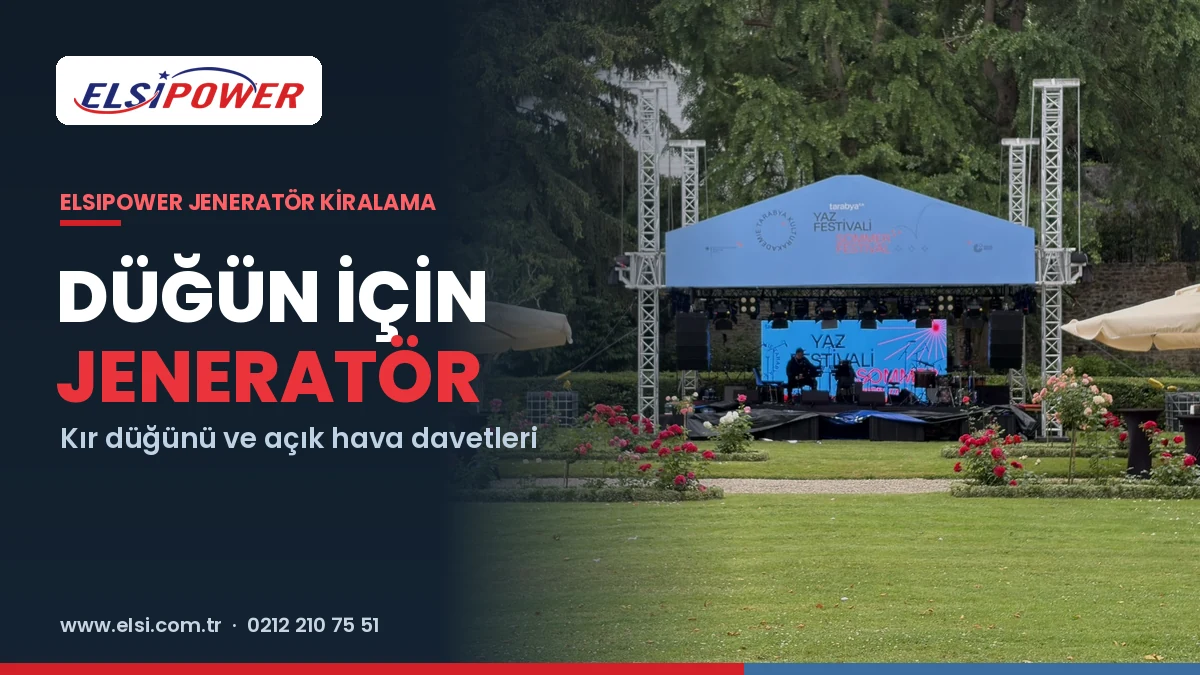
Country weddings, garden receptions, waterfront mansion events and outdoor engagements are increasingly popular. These venues are enchanting, but most lack adequate electrical infrastructure. A silent sound system, lights going out or a kitchen that cannot work can overshadow a day meant to be unforgettable. That is why generator rental for weddings is one of the steps to consider right at the start of planning.
In this guide we have gathered what to look out for when renting a generator for country weddings and outdoor receptions into a checklist.
Why Do Outdoor Receptions Need a Generator?
- Insufficient infrastructure: Gardens, vineyards, forest edges and seaside venues either have no mains supply or one that cannot carry stage and kitchen loads.
- Risk to existing wiring: Connecting all sound, lighting and kitchen loads to a small socket circuit at the venue trips the breakers.
- Risk of outages: Local power cuts or weather can cut power in the middle of the reception.
Where Does the Power Go at a Wedding?
| Area | Typical loads |
|---|---|
| Stage and DJ | Sound system, microphones, DJ equipment |
| Lighting and decor | Stage lights, tree and path lighting, festoon and string lights |
| Video | LED screen, projection, photo and video crew |
| Kitchen and catering | Warmers and bain-maries, coffee machines, coolers |
| Comfort | Heaters, fans, mobile toilet lighting |
Among these, the most overlooked are kitchen and heating loads. Caterers’ electrical equipment and heaters used for cool evenings can draw even more power than the stage. So always ask the catering company for its equipment list.
Wedding Generator Rental Checklist
- Visit the venue in advance: Decide during the survey where the generator will go, how the vehicle will reach it and where the cables will run.
- Clarify the power requirement: Collect equipment lists from the DJ or band, lighting crew and caterer. You can find the calculation method in our guide what size generator do I need.
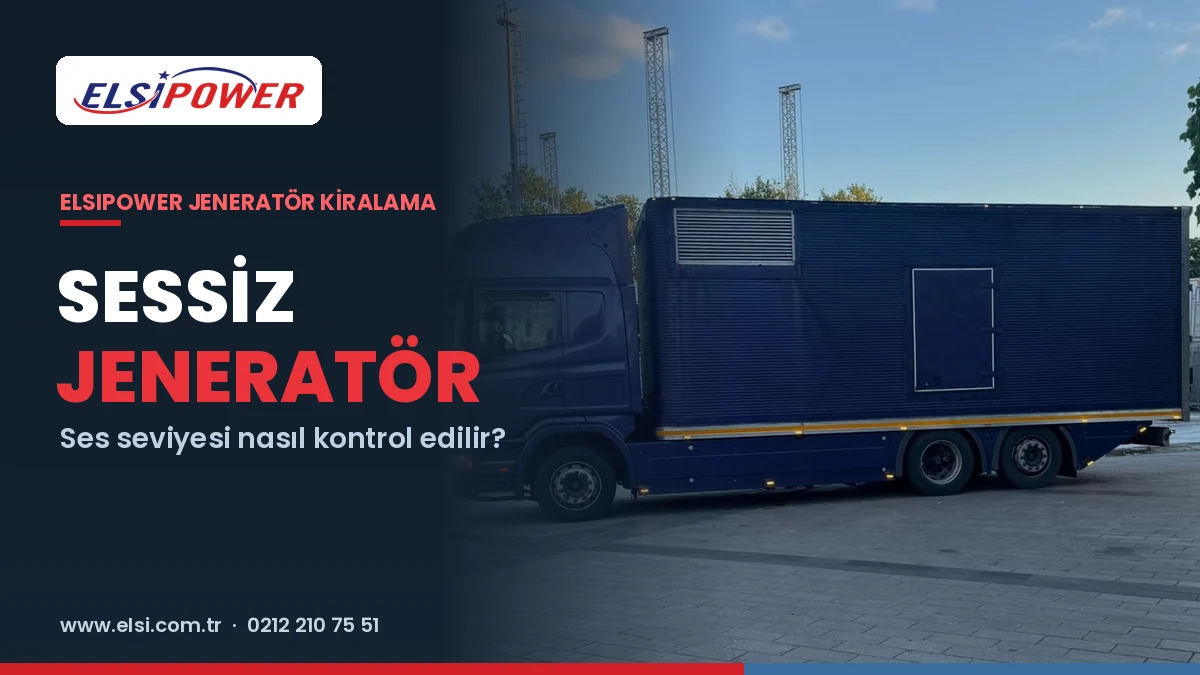
- Choose a silent generator: A wedding has speeches, a first dance and photo shoots. A canopied, silent generator and correct positioning are essential.
- Keep the generator out of sight: Choose a spot that stays out of photos and guest areas without making the cable run too long.
- Think about cable safety: Cables crossing areas where guests walk must be protected with cable ramps to remove trip hazards.
- Allow for the weather: Boards and connections should be placed under cover in case of rain.
- Don’t forget a backup plan: Fuel quantity and, if needed, backup power should be planned according to the length of the reception.
- Have a technician on site: A technician on hand throughout the reception means any problem is dealt with in minutes.
Why Is Silence So Important?
At outdoor receptions, generator noise can be disturbing, especially during vows, speeches and acoustic music. Super-silent canopied generators are almost unnoticeable in the guest area when placed at the right distance and position. We explain noise control in detail in our article on silent generator rental.
Mansions, Hotel Gardens and Restaurant Receptions
Even at venues with permanent wiring, a large sound and lighting setup can exceed the existing electrical capacity. In that case, feeding stage and lighting loads from the generator and the venue’s own lighting from the mains is a balanced solution. Installation times, vehicle access and noise rules should be agreed with the venue management in advance.
Wedding Day Flow
- Installation: The generator and distribution are usually set up before the sound and lighting crews, so power is ready when they arrive.
- Test: All circuits are tested under load before the reception starts.
- During the reception: The technician monitors the generator and load levels.
- Dismantling: Done in a planned way after the reception, at a time that complies with venue rules.
Plan a Separate Circuit for Kitchen and Catering
At weddings the highest and most irregular load usually comes from the kitchen. When warmers, bain-maries and coffee machines run together, sudden load peaks occur. Feeding the kitchen from a separate distribution circuit to the stage and lighting means a tripped breaker in the kitchen does not affect the music and lights. Discussing equipment layout with the caterer in advance ensures socket boxes are placed in the right spots.
Tips for Lighting and Decor
- Split decorative lighting into groups: Connecting tree, path and table lighting to separate circuits prevents the whole area from going dark if there is a fault.
- Use waterproof connections: Connections of string and festoon lights used outdoors must be protected from moisture.
- Think about the evening flow: Path and car park lighting for guests leaving safely at the end of the wedding should also be included in the power calculation.
Preparing for the Weather
At outdoor receptions the weather can change until the last minute. Boards and connection points should be placed under cover in case of rain, and cables kept away from puddles. Heaters for cool evenings must not be forgotten in the power calculation either; they draw more energy than expected.
What to Discuss with the Venue Owner
- When and via which route the generator vehicle can enter the venue,
- Areas where the generator can be positioned and ground conditions,
- How much of the venue’s existing electrical infrastructure can be used,
- Noise and time restrictions,
- Permitted times for dismantling.
Clarifying these points in advance prevents tension on the wedding day and makes every crew’s job easier.
The Difference Between Small and Large Receptions
A garden reception for fifty guests and a country wedding for five hundred are not planned the same way. Small receptions usually have a sound system, limited decorative lighting and a few catering appliances; a single lower-power generator is often enough. Large weddings bring stage lights, LED screens, a big kitchen, heaters and long lighting runs. At this scale, loads should be split into zones and, if needed, a second generator or a redundant solution planned.
Whatever the scale, the soundest approach is to collect all crews’ equipment lists in one place and size the power accordingly. At ELSIPOWER we inspect the reception site in person, coordinate with the crews and prepare a silent generator plan suited to your wedding.
Frequently Asked Questions
Does a small garden wedding need a generator?
Usually yes, if the venue’s electrical capacity is limited or there are kitchen and heating loads. A lower-power generator may be sufficient for small receptions.
Will guests hear the generator?
Canopied silent generators go unnoticed in the guest area when correctly positioned. The position is decided together during the survey.
How far in advance should I rent a generator for a wedding?
Demand is high, especially in summer and at weekends, so we recommend starting the planning as soon as the date is confirmed.
Can the caterer’s equipment also run on the generator?
Yes. The caterer’s equipment list is added to the power calculation and a separate distribution circuit is planned for the kitchen area.
Let’s secure the power for your reception
Send us your wedding or reception date, venue and the crews’ equipment lists; we will prepare a silent and safe generator rental plan. You can call us on 0212 210 75 51 or send an email to elsi@elsi.com.tr.