Contents
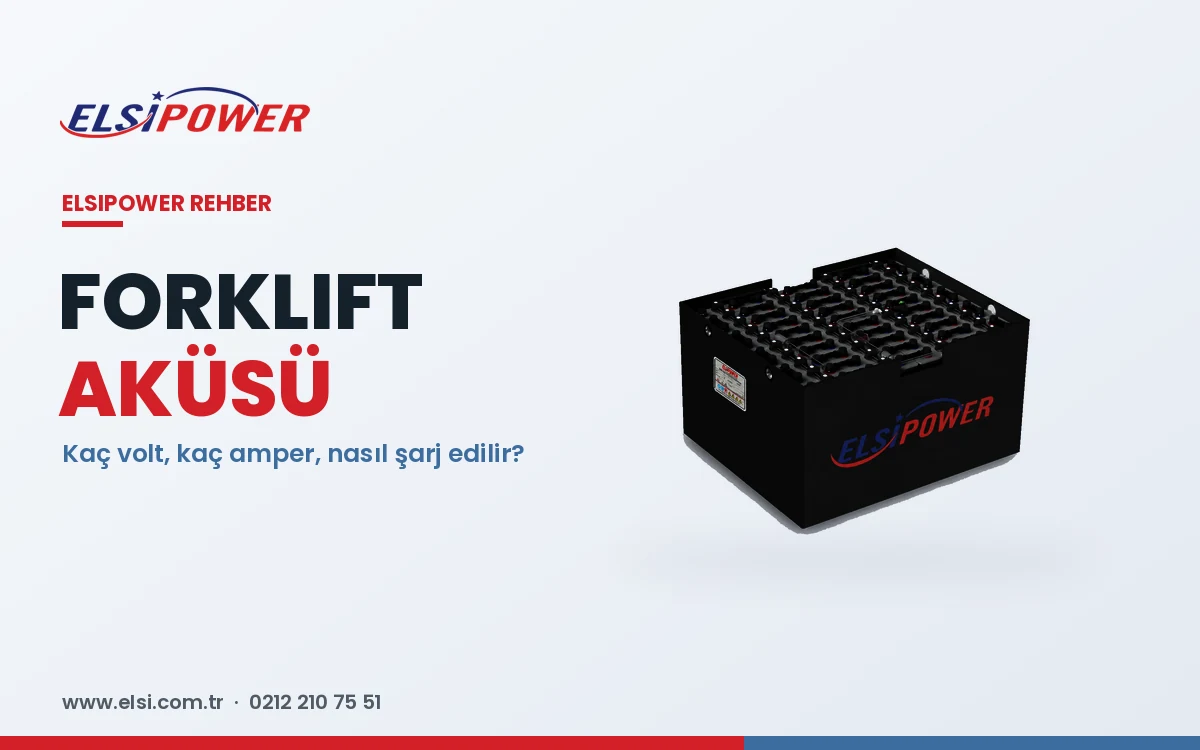
A forklift battery is both the energy source and an important part of the counterweight of an electric forklift. The wrong voltage, capacity or charging routine means machines stopping mid-shift, short battery life and unexpected costs. This guide covers forklift battery voltage, capacity (Ah), weight, charging and service life, plus pallet truck batteries. For the basics, see what is a traction battery.
What Voltage Is a Forklift Battery?
| System voltage | Typical use |
|---|---|
| 24 V | Electric pallet trucks, stackers, small equipment |
| 36 V | Light forklifts and reach trucks |
| 48 V | Most common for 1.5–2.5 t electric forklifts |
| 80 V | Heavy-duty, high-capacity forklifts |
Traction batteries are built from 2 V cells in series — a 48 V battery has 24 cells. On a label such as “24 PzS 600”, the first number is the cell count and the last is the capacity in Ah.
How Many Ah Should It Be?
- Shift length: single or double shift?
- Duty intensity: constant lifting versus occasional use
- Battery compartment size: limits the maximum capacity
- Depth of discharge: regularly going below 20% calls for more capacity or opportunity charging
Why Battery Weight Matters
Forklift batteries weigh from a few hundred kilograms to over two tonnes, and the battery is part of the counterweight. Fitting a battery much lighter than the manufacturer's minimum can affect stability — always check the minimum/maximum battery weight on the truck's data plate.
How to Charge a Forklift Battery
- Use a charger matched to the battery voltage and capacity.
- For lead-acid traction batteries, charge fully when the battery reaches about 20–30% rather than doing frequent short top-ups.
- Follow the classic “8 h work – 8 h charge – 8 h rest” cycle where possible.
- For flooded batteries, check electrolyte after charging and add only distilled water.
- Lead-acid batteries release hydrogen while charging — the charging area must be well ventilated and free of sparks and open flames.
Mistakes That Shorten Battery Life
- Deep discharging the battery
- Interrupting charges and constant short charging
- Not checking electrolyte, or topping up before charging
- Dirty battery tops and loose connections
- Charging in very hot or very cold areas
In intensive multi-shift operations, lithium forklift batteries are increasingly chosen for opportunity charging and minimal maintenance.
Pallet Truck Batteries
Electric pallet trucks usually run on 24 V, using maintenance-free gel/AGM batteries on smaller models and traction batteries on larger ones. Match voltage, compartment size, charger and daily runtime.
Frequently Asked Questions
When should I add water to a forklift battery?
After charging is complete — and only distilled water. Adding water before charging can cause overflow.
Can I fit a lighter battery?
Not below the manufacturer's minimum weight, because the battery is part of the counterweight.
Let's find the right battery for your forklift
Send us your forklift model, current battery label and shift pattern, and we will recommend the right ELSIPOWER traction battery. +90 212 210 75 51 · WhatsApp