Forklift ve Endüstriyel Araçlar İçin Traksiyoner Akü Seçim Rehberi
Traksiyoner Akü Nedir, Nerede Kullanılır? 2026 Fiyatları
3 Şubat
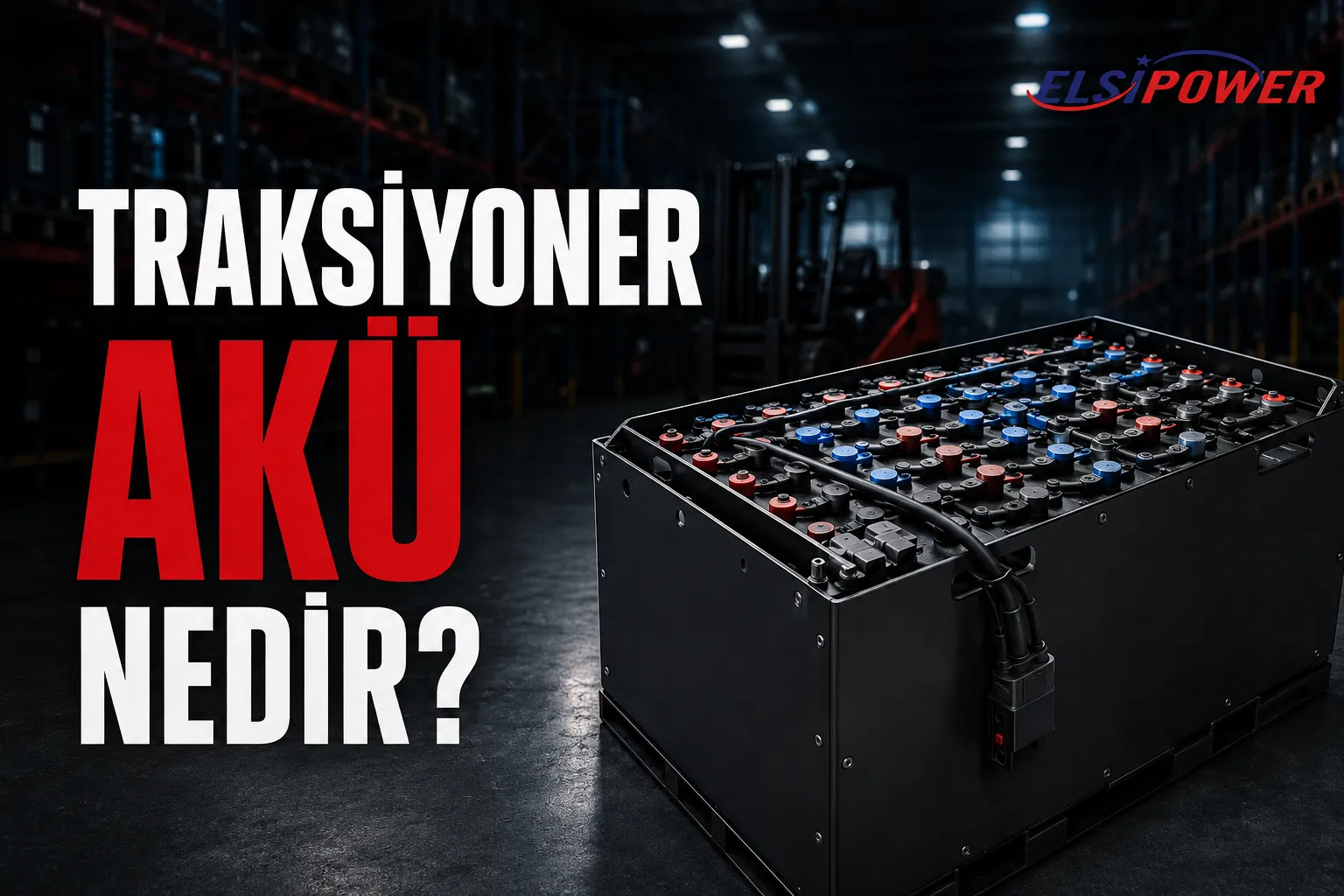
What Is a Traction Battery, Where Is It Used? Traction Battery Prices 2026
A traction battery is a type of industrial battery designed to provide motive power to electric work machines and industrial vehicles. It is built to withstand frequent charging and discharging cycles. From forklifts and pallet trucks to stackers and floor-cleaning machines, the daily performance of many types of equipment depends on a correctly selected motive power battery. In this guide, we explain what a traction battery is, where it is used, what to consider when selecting one and which factors influence traction battery prices in 2026.
To determine the correct capacity for your equipment, assess the condition of your existing battery or receive technical assistance, contact Elsipower specialists on +90 212 210 75 51 or email elsi@elsi.com.tr.
What Is a Traction Battery?
Traction batteries are industrial batteries that store electrical energy and deliver it steadily over an extended period to power the drive system of a vehicle. The terms “motive power battery”, “forklift battery” and “industrial vehicle battery” are also commonly used when searching for a similar solution. However, not every industrial battery is designed for the same purpose, so a battery should never be selected without considering the technical requirements of the vehicle.
The primary job of a starter battery is to deliver a high current for a short time to start an engine. A traction battery, on the other hand, is designed to provide energy throughout a working shift and to tolerate regular discharge and recharge cycles. Its internal construction, capacity, cell arrangement, connections, tray dimensions and compatibility with the charger must therefore be evaluated separately.
A traction battery is more than an energy storage unit. It directly affects vehicle runtime, lifting and driving performance, operational planning and total operating cost. An unsuitable battery may result in short operating periods, premature capacity loss, overheating, inefficient charging and unplanned downtime.
How Does a Traction Battery Work?
During charging, the battery stores electrical energy as chemical energy. When the vehicle is operating, it converts that stored energy back into electricity and supplies it to the drive motor and auxiliary systems. Several cells are connected in series to achieve the total voltage required by the vehicle. The capacity of those cells is a major factor in determining how long the battery can supply energy under suitable operating conditions.
Voltage and ampere-hour capacity alone do not provide the full picture. Power demand, working intensity, load weight, floor gradient, ambient temperature, shift duration, opportunity charging and charger characteristics all affect actual runtime. For this reason, there is no single answer to the question “How many hours will a traction battery operate?”
The battery must also fit the vehicle physically. Tray dimensions, total weight, connector type, cable direction and connection layout must be checked rather than relying solely on electrical ratings. In some industrial vehicles, battery weight is also an essential part of the counterbalance system.
Where Are Traction Batteries Used?
Traction batteries are used in equipment that moves with an electric motor instead of a combustion engine and requires energy for extended periods. They are particularly popular in warehouses and manufacturing facilities because they support quiet operation, avoid exhaust emissions at the point of use and can deliver efficient operation when supported by a suitable maintenance plan.
Forklifts and warehouse equipment
Electric forklifts, powered pallet trucks, stackers, reach trucks, order pickers and narrow-aisle warehouse vehicles are among the most common applications. In logistics centres, a battery capable of supporting the required shift helps prevent interruptions to loading, picking and dispatch operations.
Cleaning and service vehicles
Battery-powered floor scrubbers, industrial sweepers and certain electric service vehicles also use traction batteries for motive power. Reliable battery operation is important for maintaining cleaning schedules in shopping centres, hospitals, airports, factories and large warehouses.
Manufacturing and heavy-industry applications
In-plant transport vehicles, work platforms, suitable electric mining or tunnelling equipment and special-purpose industrial machines may use traction battery systems. Where high temperatures, dust, vibration or demanding multi-shift conditions are present, battery selection and maintenance intervals should be planned accordingly.
Electric transport and special-purpose vehicles
Golf carts, on-site personnel carriers, airport ground-support equipment and certain electric platforms can also use application-specific motive power batteries. The key requirement is that the battery meets the voltage, capacity, weight and dimensional specifications of the equipment.
Traction Battery Prices 2026: What Determines the Cost?
When researching traction battery prices in 2026, it is not possible to obtain an accurate result by asking only “How much does a forklift battery cost?” Even within the same vehicle category, voltage, capacity, number of cells, tray dimensions and working conditions may vary. Accurate pricing therefore requires an assessment of the relevant technical information.
Elsipower does not publish a fixed numerical price in this article because a general figure based on incomplete information may not reflect the actual requirements of an operation. The following factors are considered when preparing a current quotation:
- Battery voltage: The voltage required by the vehicle’s electrical system.
- Capacity: The ampere-hour rating and energy needed for the daily operating period.
- Number and configuration of cells: The cell arrangement used to achieve the total voltage.
- Tray dimensions and weight: Compatibility with the battery compartment and vehicle counterbalance requirements.
- Connection details: Connector type, cable cross-section, cable direction and terminal layout.
- Operating intensity: Single-shift, multi-shift, heavy-load or intermittent operation.
- Charging system: Compatibility between the battery and the existing charger or rectifier.
- Installation and service: Site inspection, replacement, commissioning and maintenance requirements.
- Supply and market conditions: Raw materials, manufacturing, logistics and currency movements.
Listings described as a “cheap traction battery” should not be assessed only by their initial purchase cost. A battery that does not suit the vehicle or fails to meet the real duty requirement can create a higher total cost through frequent charging, insufficient shift runtime, premature failure and lost working hours. Capacity, dimensions, connections, service coverage and expected operating performance should be compared together.
For information about a 2026 traction battery quotation, send Elsipower the vehicle identification details, existing battery label, tray dimensions and clear photographs of the connections. The technical team can examine the available information and help identify the appropriate solution.
How to Select the Right Traction Battery
Correct selection involves more than copying the value printed on an old battery. The vehicle data plate, the past performance of the existing battery and the daily operating pattern should be considered together. This is especially important with used equipment, as a battery of the wrong size or capacity may previously have been installed.
1. Check the vehicle and battery data plates
Determine the vehicle’s operating voltage, recommended battery capacity and required weight range. If the existing battery label cannot be read, technical measurements and a physical inspection may be necessary.
2. Measure the battery tray accurately
Measure length, width and height accurately. Record the cable exit direction, connector position and lifting points as well. Incorrect dimensions may prevent the battery from fitting into the compartment or being secured safely.
3. Define the shift duration and workload
Daily operating hours, the weight being carried, ramp use and the number of shifts are important capacity considerations. A forklift operating continuously under load does not have the same energy requirement as a pallet truck used briefly at intervals.
4. Verify charger compatibility
The battery and charger must be compatible in voltage, charging current and charging profile. Incorrect settings can cause incomplete charging, overheating, excessive water loss in applicable systems and shortened battery life.
5. Consider the total cost of operation
In addition to purchase cost, consider expected runtime, maintenance, energy consumption, access to technical support and the risk of unplanned downtime. A correctly specified system helps make operations more predictable.
How Is a Traction Battery Maintained?
Regular maintenance helps preserve capacity and makes it possible to identify developing issues at an early stage. As the correct maintenance procedure depends on battery technology and manufacturer instructions, work should be carried out by trained personnel.
- Inspect battery and charger connections for looseness, oxidation and abnormal heating.
- Check cables, connectors, terminals and insulation components for damage.
- Keep the battery surface clean and dry, and prevent metal objects from contacting the terminals.
- Provide adequate ventilation in the charging area and keep sparks and open flames away.
- For applicable battery types, electrolyte levels, cell voltages and density values should be checked by qualified personnel.
- Do not leave a battery unnecessarily in a deeply discharged condition for long periods.
- Maintain records of charging, operating hours, inspection findings and faults.
A noticeable reduction in runtime, imbalance between cells, excessive temperature, unusual odour, electrolyte overflow, hot cables or charging that takes longer than normal may indicate a need for technical inspection. If a condition could create a safety risk, stop using the equipment and obtain specialist support.
How to Extend Traction Battery Service Life
Battery life is affected by the number of cycles, depth of discharge, temperature, maintenance quality and charging conditions. Service life differs between applications and should not be evaluated only in calendar years.
- Use a charger suitable for both the vehicle and battery.
- Complete charging in accordance with operating and service recommendations.
- Avoid repeatedly operating the battery at a very low state of charge.
- Monitor battery temperature and charging-area ventilation.
- Do not postpone periodic maintenance and capacity checks.
- For multi-shift operations, create a battery rotation and rest plan where appropriate.
- Train operators in safe charging, connection and handling procedures.
How Can You Identify a Traction Battery Problem?
A forklift or work machine operating for less time than before does not always mean that the complete battery must be replaced. The cause may be a cell, cable connection, connector, charger, the vehicle’s electrical system or the operating routine. Measurements should be completed before making a replacement decision.
Common complaints include an inability to complete the shift, a rapid voltage drop under load, capacity falling shortly after charging, temperature differences between cells and heating at connection points. Capacity testing and cell checks help determine whether repair may be appropriate or whether battery replacement is necessary.
Traction Battery Service in Istanbul and Support Across Türkiye
Elsipower assists businesses with traction battery selection, evaluation of existing systems, maintenance planning, charger compatibility and technical guidance. For traction battery enquiries in Istanbul, requests are assessed from industrial and commercial areas across both the European and Asian sides, including Beylikdüzü, Esenyurt, Avcılar, Büyükçekmece, Küçükçekmece, Başakşehir, Arnavutköy, Bağcılar, Bahçelievler, Bakırköy, Zeytinburnu, Bayrampaşa, Eyüpsultan, Kağıthane, Şişli, Sarıyer, Beşiktaş, Pendik, Tuzla, Kartal, Maltepe, Ataşehir, Ümraniye and Sancaktepe.
Elsipower also receives traction battery enquiries from manufacturing, warehousing and logistics centres throughout Türkiye, including Kocaeli, Gebze, Tekirdağ, Çorlu, Çerkezköy, Bursa, Balıkesir, İzmir, Manisa, Ankara, Konya, Eskişehir, Sakarya, Düzce, Bolu, Adana, Mersin, Antalya, Kayseri, Gaziantep, Denizli and Samsun. Service and delivery options are clarified according to the scope of the request, location and technical requirements.
If you are searching for “traction battery service near me”, “where to buy a forklift battery”, “traction battery replacement”, “industrial battery technical support” or “traction battery quotation”, share your equipment and battery details for a more accurate assessment.
Frequently Asked Questions About Traction Batteries
What does traction battery mean?
A traction battery is an industrial battery designed to provide long-duration energy to the drive system of an electric vehicle or work machine. It is also known as a motive power battery.
Are traction batteries and forklift batteries the same?
Batteries used in electric forklifts are generally traction batteries. However, voltage, capacity, dimensions, weight and connections differ between vehicles, so not every traction battery is suitable for every forklift.
Where are traction batteries used?
They are used in electric forklifts, powered pallet trucks, stackers, reach trucks, order-picking equipment, floor-cleaning machines, golf carts and various industrial transport vehicles.
What affects traction battery prices in 2026?
Voltage, capacity, number of cells, tray dimensions, weight, connector type, operating intensity, charger requirements, installation and service coverage all influence price. A reliable quotation requires technical information.
What ampere-hour capacity does a traction battery need?
The necessary capacity depends on vehicle specifications, daily operating time, carried load and shift pattern. A higher ampere-hour figure is not automatically the correct choice; electrical and physical compatibility must be verified.
How long does a traction battery take to charge?
Charging time varies according to battery capacity, depth of discharge, temperature and charger output. It is not accurate to state a fixed charging duration without examining the battery and charger details.
How long does a traction battery last?
Service life depends on usage frequency, depth of discharge, temperature, maintenance, charging quality and operator practices. Regular inspection and correct operation help preserve expected cycle performance.
Can an old traction battery be repaired?
Depending on the fault, work on cables, connectors, connections or individual cells may be possible. Any repair decision should follow capacity testing, cell measurements and a safety inspection.
What information is required for a traction battery quotation?
Vehicle and battery data plates, voltage, capacity, tray dimensions, connector photographs, daily operating time and application details help speed up the assessment. Send the information to elsi@elsi.com.tr.
Share