Kesintisiz Güç Kaynağı (UPS) Rehberi
Kesintisiz Güç Kaynağı Rehberi: Nedir, Ne İşe Yarar?
24 Şubat
Uninterruptible Power Supply Guide: What Is It and What Does It Do?
Today, electronic systems such as computers, servers, security systems, medical devices and industrial equipment rely on continuous power. Power outages, voltage fluctuations and sudden electrical changes can negatively affect device performance, cause data loss and even system failures.
This is where Uninterruptible Power Supplies (UPS) become essential. A UPS system provides temporary backup power during electrical interruptions and helps connected devices continue operating safely. It also protects sensitive electronic equipment against voltage irregularities.
So, what is a UPS, how does it work, which UPS type is suitable for different applications and how should the right UPS be selected? In this guide, you will find essential information about Online UPS, Line-Interactive UPS, application areas, power capacity and frequently asked questions.
What Is an Uninterruptible Power Supply?
An Uninterruptible Power Supply (UPS) is a power protection system that temporarily provides energy through batteries during power outages. It also helps protect equipment from voltage drops, surges and electrical fluctuations.
UPS systems do more than provide backup power. They help sensitive electronic equipment operate more safely, efficiently and consistently, especially in environments where downtime and data loss are critical.
Types of Uninterruptible Power Supplies
Online UPS
Online UPS systems continuously filter power and deliver clean, stable and uninterrupted electricity to connected devices. They provide one of the highest levels of protection for critical systems.
They are widely used in servers, data centers, hospitals, production facilities, laboratories and telecommunication infrastructures.
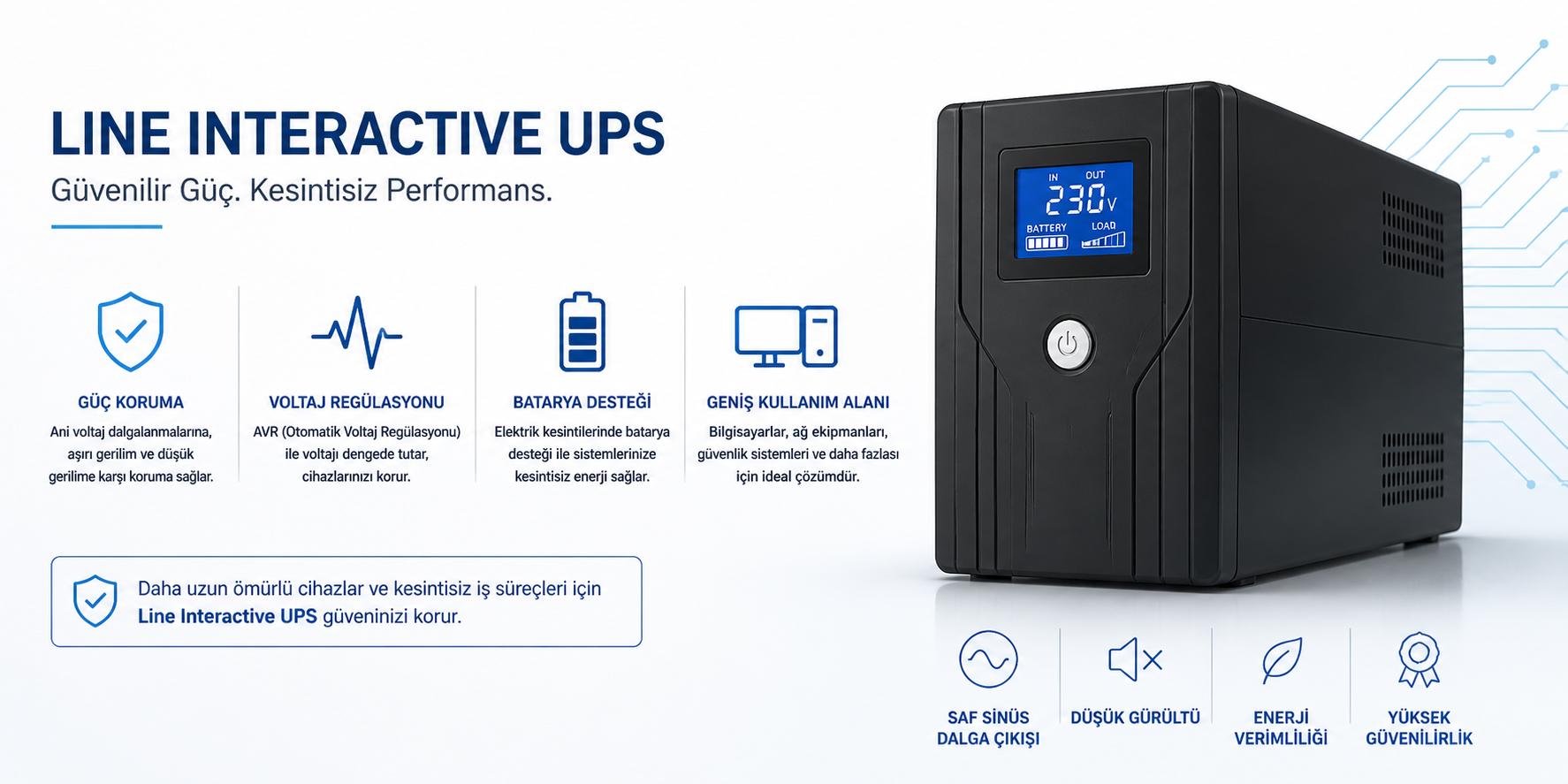
Line-Interactive UPS
Line-Interactive UPS systems are commonly preferred for small and medium-scale applications. They provide battery backup during outages and regulate voltage fluctuations to a certain degree.
These systems are widely used for office computers, modems, security cameras, POS devices and small network infrastructures.
Offline / Standby / Battery Backup UPS
Offline UPS systems provide basic power protection and switch to battery backup during power failures.
They are generally suitable for home users, low-power devices and basic backup requirements.
Where Are UPS Systems Used?
- Server and network systems
- Data centers
- Hospitals and medical equipment
- Offices and businesses
- Security camera and alarm systems
- Industrial production facilities
- Telecommunication infrastructures
- Restaurants, stores and retail businesses
Advantages of Using a UPS
- Provides operational continuity during outages.
- Helps reduce the risk of data loss.
- Protects devices against voltage fluctuations.
- Minimizes operational interruption risks.
- Supports the protection of sensitive electronic equipment.
Conclusion
A properly selected UPS system provides protection not only against power outages but also against electrical fluctuations and sudden energy problems. Choosing the right UPS is essential for equipment safety and business continuity.
ELSIPOWER supports business continuity with uninterruptible power supply solutions designed for different capacities and application needs.
Share